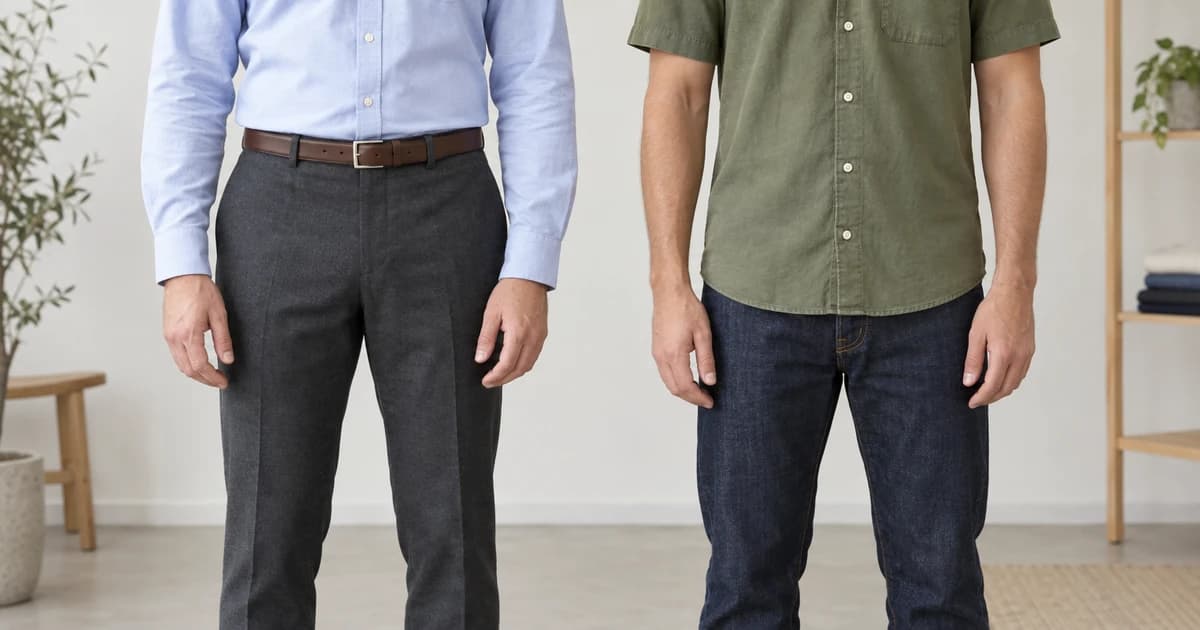
Tuck in a shirt when the outfit calls for a defined waist and a dressed-up finish, especially with a suit or a shirt and tie. Leave it untucked when the shirt is cut for that purpose and the setting is casual. The useful test is not simply whether the hem is curved: check its length, how it hangs and what happens when you move.
Start with a shirt you already own. Put on the trousers and shoes you plan to wear, then compare the whole outfit tucked and untucked. A decision made with the shirt alone can change once you add a jacket or a higher trouser waistband.
Start with the occasion
For a conventional suit-and-dress-shirt outfit, a full tuck is the straightforward choice. It keeps the waist clean and makes the shirt, trousers and jacket read as one outfit. If you are adding a tie, tuck the shirt rather than leaving a long tail beneath it. Our tie guide covers the next decision: length, width and knots.
For a casual lunch, weekend errands or a relaxed dinner, either treatment can work. An untucked casual shirt with jeans and sneakers is easy; a tucked shirt with chinos and loafers looks more deliberate. Neither choice automatically makes clothes appropriate for an event. Follow an invitation or workplace policy first, and ask the host if a dress code is unclear.
A useful middle ground for an office that permits it is a button-up shirt tucked into chinos, worn without a tie. You can take off the jacket without the outfit losing its shape. For a more relaxed office, try an appropriately short untucked shirt, but judge it against the actual workplace rather than a retailer’s “office-ready” label.
Read the hem, then check the length
A straight hem often belongs to a casual shirt intended to hang outside the trousers. Long front and back tails often make a shirt easier to keep tucked. Those are clues, not rules: some casual shirts have a curved hem, and some straight hems are long enough to tuck.
Proper Cloth suggests roughly mid-seat at the back and partway down the trouser fly at the front as starting points for untucked length. It also notes that body shape changes the result. UNTUCKit similarly uses a mid-zipper front hem with some pocket visible. Treat those landmarks as a fitting-room comparison, not a measurement every shirt must hit.
Look at the side opening as well as the front. A shirt can seem long enough from one angle while rising high at the sides. Sit down, reach forward and lift your arms to a comfortable height. If it exposes more than you want or catches around your hips, try another cut before deciding that all untucked shirts are wrong for you.
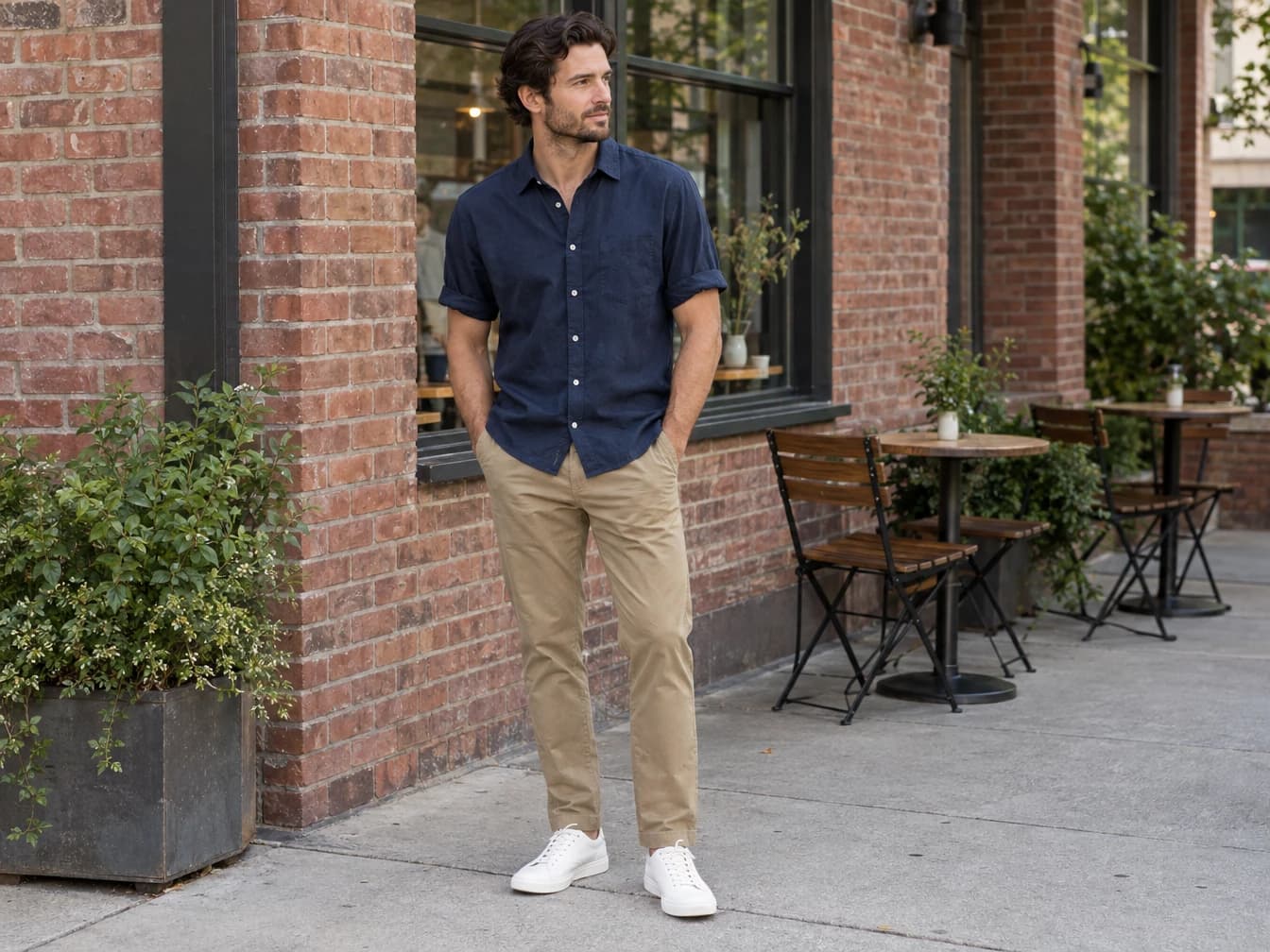
The photographs are styling illustrations, not exact representations of the shopping products below.
Make a full tuck comfortable
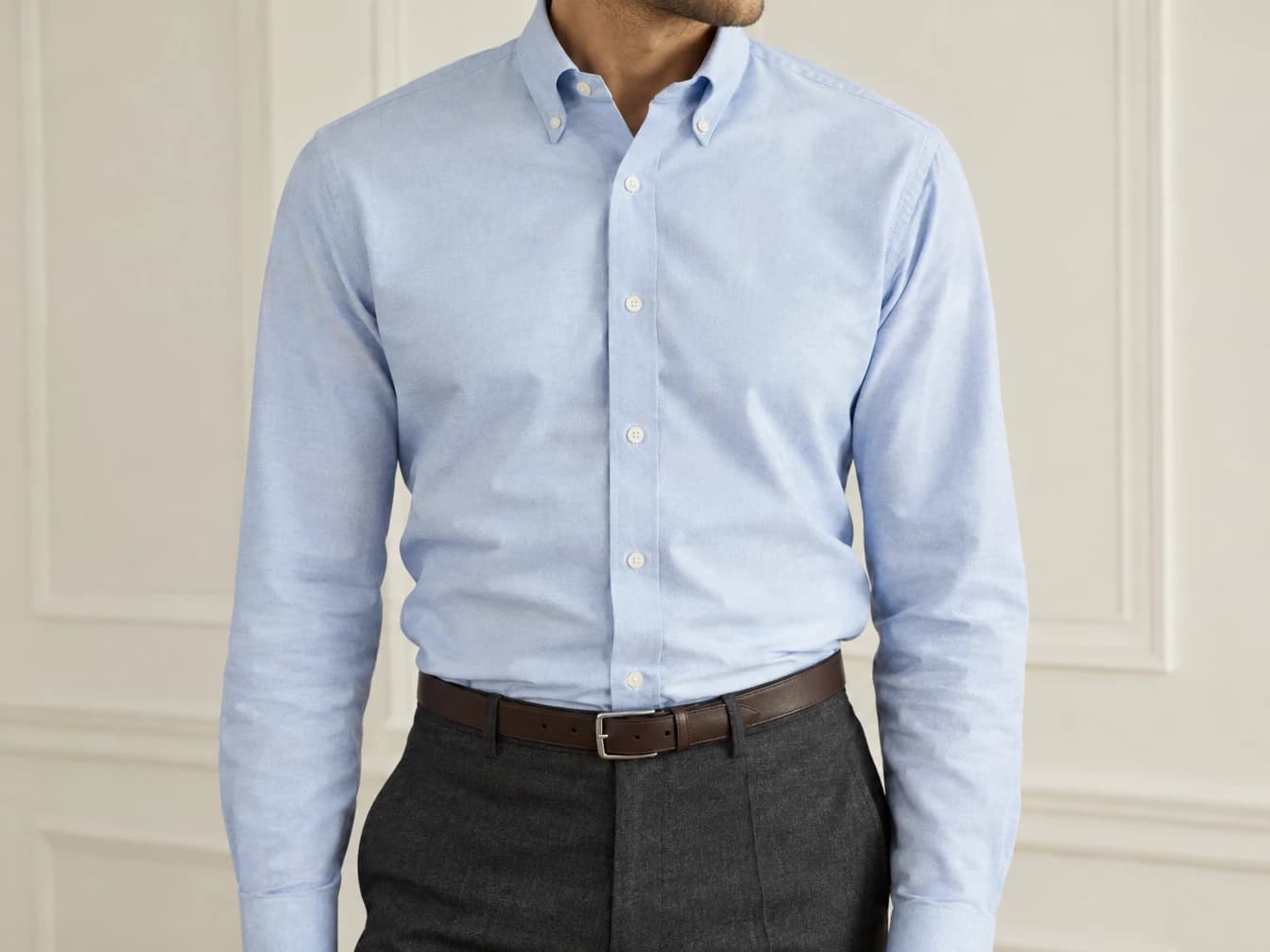
Put the shirt on first and fasten the buttons you normally wear closed. Set the trousers at their intended waist position, then smooth the shirt down around your body before fastening the waistband. Do not pull so hard that the collar or shoulders feel dragged downward.
Once the trousers are fastened, move your arms and let a little fabric settle above the waistband. You want enough freedom to sit and reach without a large ring of fabric puffing out. Finish by checking the front placket and trouser fly in a mirror or photograph. They do not need ruler-straight alignment, but a twisted shirt is usually easy to spot and correct.
A small fold of excess fabric at each side can tidy a roomy shirt for the moment. It will not fix a shirt that is much too large through the chest or waist. If every tuck becomes a bulky bundle, compare a different shirt cut or ask a tailor what can reasonably be altered.
A belt can finish the outfit and help trousers stay in place. It is not a substitute for a waistband that fits. Avoid tightening it until the trousers gather just to hold the shirt down.
If the shirt keeps coming out
Check where it escapes. A shirt that pulls out at the sides after reaching may be too short for that use, particularly at the curved side seams. One that bunches heavily at the waist may have more body width than you want. Trousers sliding downward can also disturb a tuck that looked fine while standing still.
Try sitting, standing and reaching for something at shoulder height before leaving the fitting room. Do not judge security by a single straight-backed pose. If you want one shirt to do both jobs, test both treatments with your usual trousers. A compromise length may work, but a very short casual shirt and a long dress shirt solve different problems.
Before shortening a shirt, tell the tailor whether you still want to tuck it. Ask them to pin the proposed hem and show you the side curve and the space below the lowest button. Removing length changes more than the front view, and fabric cut away cannot simply be put back.
Let outer layers stay relaxed
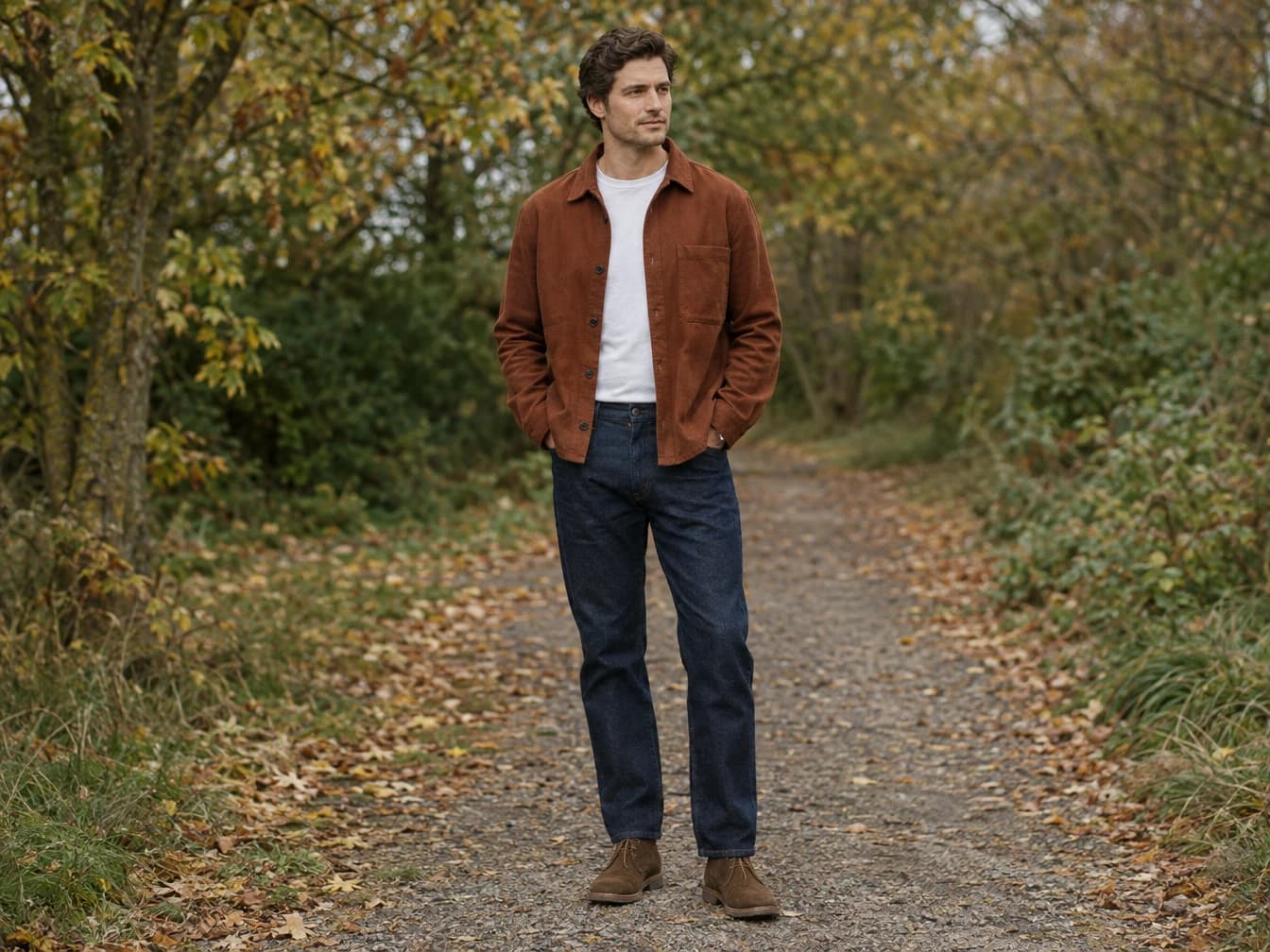
An overshirt worn open as a light jacket usually works best left outside the trousers. Treat the layer underneath separately. Tucking a plain T-shirt gives the open overshirt a clear waistband to frame; a short untucked tee can also work if it does not create an unwanted strip beneath the outer hem.
With a sweater over a long button-up shirt, try tucking the shirt first. This keeps the tails from collecting beneath the knit. If you deliberately want a little shirt showing, check the back and sides so the effect feels consistent rather than accidental.
A half tuck or front tuck is an optional casual styling choice. Try it with soft, light fabric if you like the asymmetry. If it creates a lump or needs constant adjustment, a full tuck or a clean untucked hem is easier to wear. You do not need a special tuck to make a simple outfit interesting.
For more combinations, see our overshirt outfit guide and chambray shirt outfits.
Two useful shirts to compare
As an Amazon Associate, we earn from qualifying purchases.
Van Heusen Regular Fit Poplin Solid Dress Shirt is a conventional dress-shirt option to consider if you need a shirt for tucked outfits. The checked listing is white, with a 17.5-inch neck and 34–35-inch sleeve; choose your own measurements. The product photograph shows a pointed collar and long sleeves. It is a shopping option, not the blue shirt in our photographs, and the “regular fit” label does not guarantee the right body width or tail length for you. Compare the current size chart and return terms before ordering.
Wrangler Authentics Short Sleeve Camp Shirt offers a casual alternative to compare. The checked listing is Vintage Indigo in Large; the product photo shows an open camp collar, short sleeves, a chest pocket and a relatively straight hem. It is different from the navy long-sleeve shirt in our illustration. Check the hem on your own body rather than assuming the pictured length will match yours.
You do not need to buy a special shirt to try this advice. Begin by checking the hems of the shirts you already wear. If you do shop for an untucked cut, look for an actual garment-length measurement or compare a try-on with a shirt you know fits. Brand sizing names alone are not enough.
Quick answers
Can I tuck a shirt into jeans?
Yes. Straight or relaxed jeans with a tucked Oxford or chambray shirt can make a simple outfit look more defined. Check that the waistband sits comfortably and the shirt does not bunch inside it. The shoes and any jacket will influence how dressed up the result feels.
Does a curved hem always need tucking?
No. Check the length and side curve on your body. A short casual shirt can have a rounded hem and still sit neatly outside the trousers.
Should I size down to make an untucked shirt shorter?
Only if the smaller size also fits your shoulders, chest and arms. If the current width is comfortable but the hem is too long, look for a shorter length or another cut instead of accepting pulling buttons and restricted movement.
Start with the setting, check the hem, then move around. Keep the treatment that stays comfortable and gives the outfit the shape you want. For the rest of the silhouette, our trouser-break guide explains how pant hems meet your shoes.
Sources and fit references
- Proper Cloth: How Long Should the Shirt’s Back Length Be? — length landmarks, body-shape considerations and the distinction between tucked and untucked cuts.
- UNTUCKit: 4 Tips on Wearing Your Shirt Untucked — the brand’s front-hem and pocket-visibility guidance. These are fitting suggestions, not universal dress-code rules.