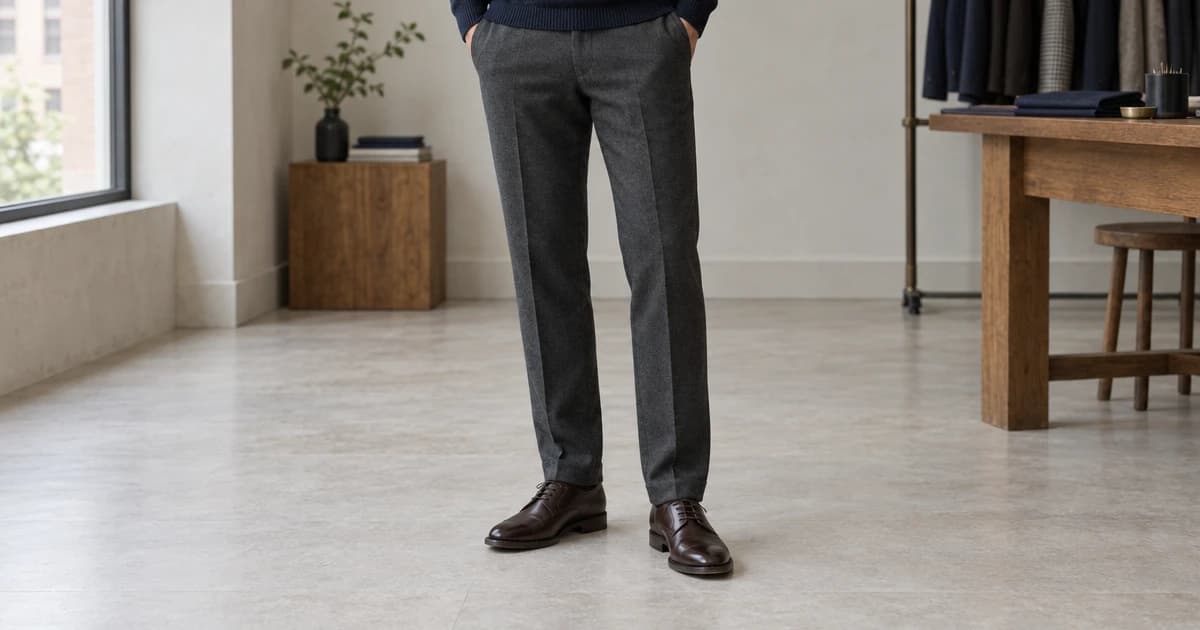
Pants should finish where their shape and your shoes work together. For everyday chinos and tailored trousers, start with a hem that touches the shoe with either no fold or one small bend. Then check the side and back: the fabric should fall freely, clear the ground and stay out from under your heel. That is a more useful test than choosing a trouser length from your height alone.
You do not need to shorten every pair to the same point. Wide trousers, narrow jeans, loafers and boots create different results. This guide helps you choose a length before buying another pair or asking a tailor to take yours up.
What does trouser break mean?
The break is the fold created when the bottom of a trouser leg meets the shoe. It describes the fabric’s behavior, not a measurement in inches. Proper Cloth notes that both inseam length and the lower leg’s taper affect it.
- No break: the hem reaches the shoe with little or no visible fold. This is different from a deliberately cropped trouser that ends above it.
- Slight break: a small bend at the front, with most of the leg hanging straight. It is a useful starting point for everyday trousers.
- Half break: a more visible fold over the shoe. Try it if you prefer a little extra coverage.
- Full break: a deeper fold with more fabric resting on the shoe, generally easier to accommodate in a wider leg.
These names are conversation starters. Bring a photograph or have the hem pinned so you and your tailor can see the same result.
Pick a starting point for your pants
Chinos: try a small break first
Put on your most-used shoes and let the chinos settle at the waist. A slight break is an easy place to start: tidy enough for a shirt and casual jacket, without requiring an ankle-baring crop. If the hem folds repeatedly over the laces, turn it under temporarily and compare the silhouette.
Check the thigh and seat before deciding the length. If the trousers are pulling upward when you move, shortening the bottom will not solve that fit problem. Likewise, a waistband that keeps slipping down can make the legs look too long even when the inseam is close.
Tailored trousers: decide with the whole outfit on
Try them with the jacket, socks and dress shoes you intend to wear. A clean no-break finish and a single controlled fold are both reasonable choices. Suitsupply shows both approaches in its trouser-fit guidance; neither is a universal rule for every man or occasion.
Pay attention to the back of the hem as well as the front. Ask the tailor to show you how the length sits around the shoe instead of judging only the view from above. For a wider, softly draped trouser, preserve the intended line before choosing a dramatically shorter finish.
Jeans: separate a deliberate cuff from accidental bunching
A small cuff can look purposeful with casual denim. Several heavy rolls usually mean you are using the cuff to store a lot of spare length. Unroll it, try a smaller turn-up and decide whether a proper hem would be more comfortable.
Some denim outfits deliberately use fabric stacking. If that is not the look you want, check whether the jeans can fall over the shoe before removing length. A very narrow opening may catch on the shoe even after the inseam is shortened.
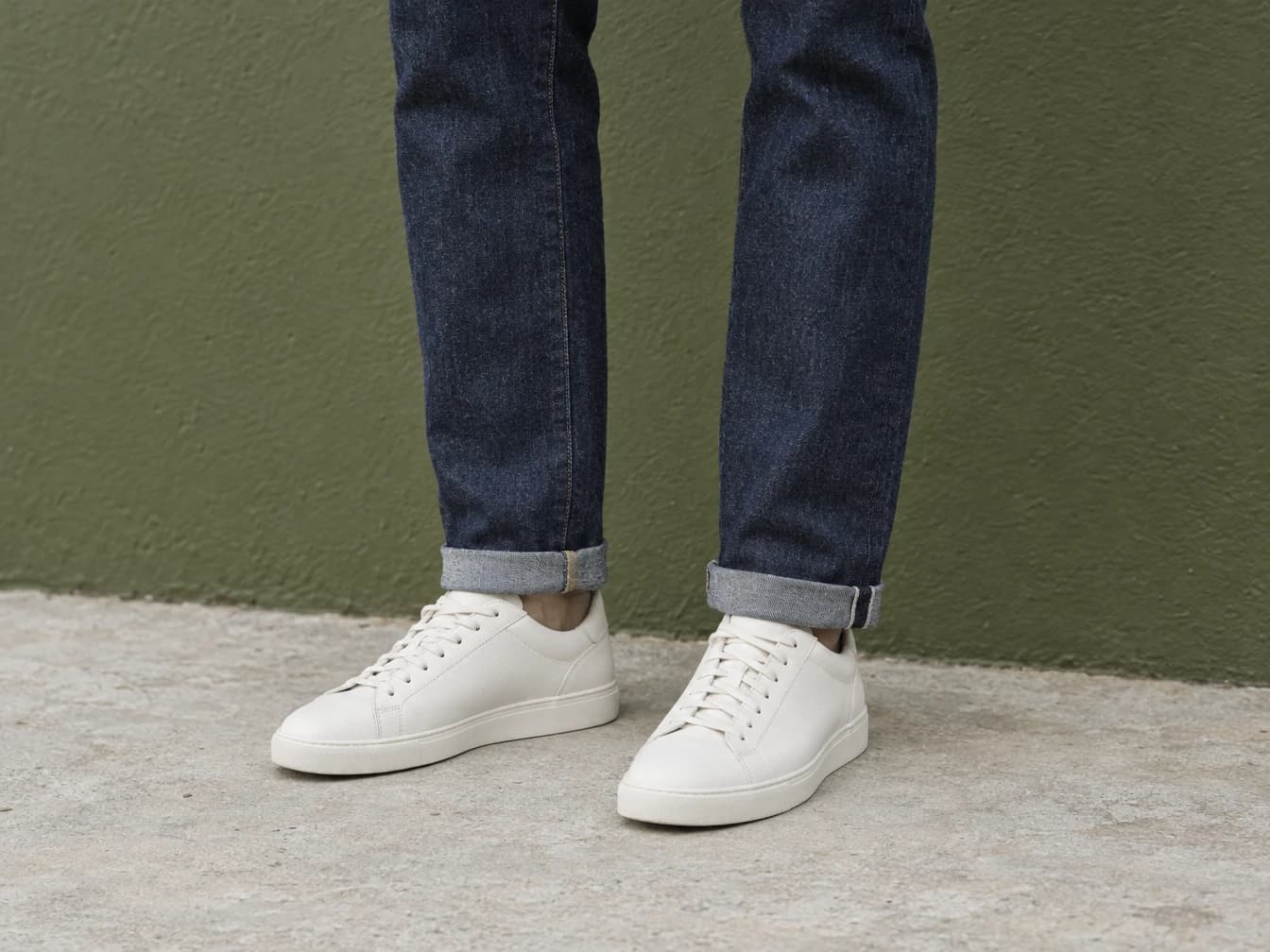
A modest denim turn-up is one option, not a required cuff height. The photographs illustrate styling rather than exact products or measured tailoring specifications.
Your shoes change where the hem lands
Low-profile sneakers: Try the pants with the actual pair. A hem that barely touches a slim sneaker may sit differently on a bulky running shoe. Check that the fabric does not collapse into several folds over the tongue.
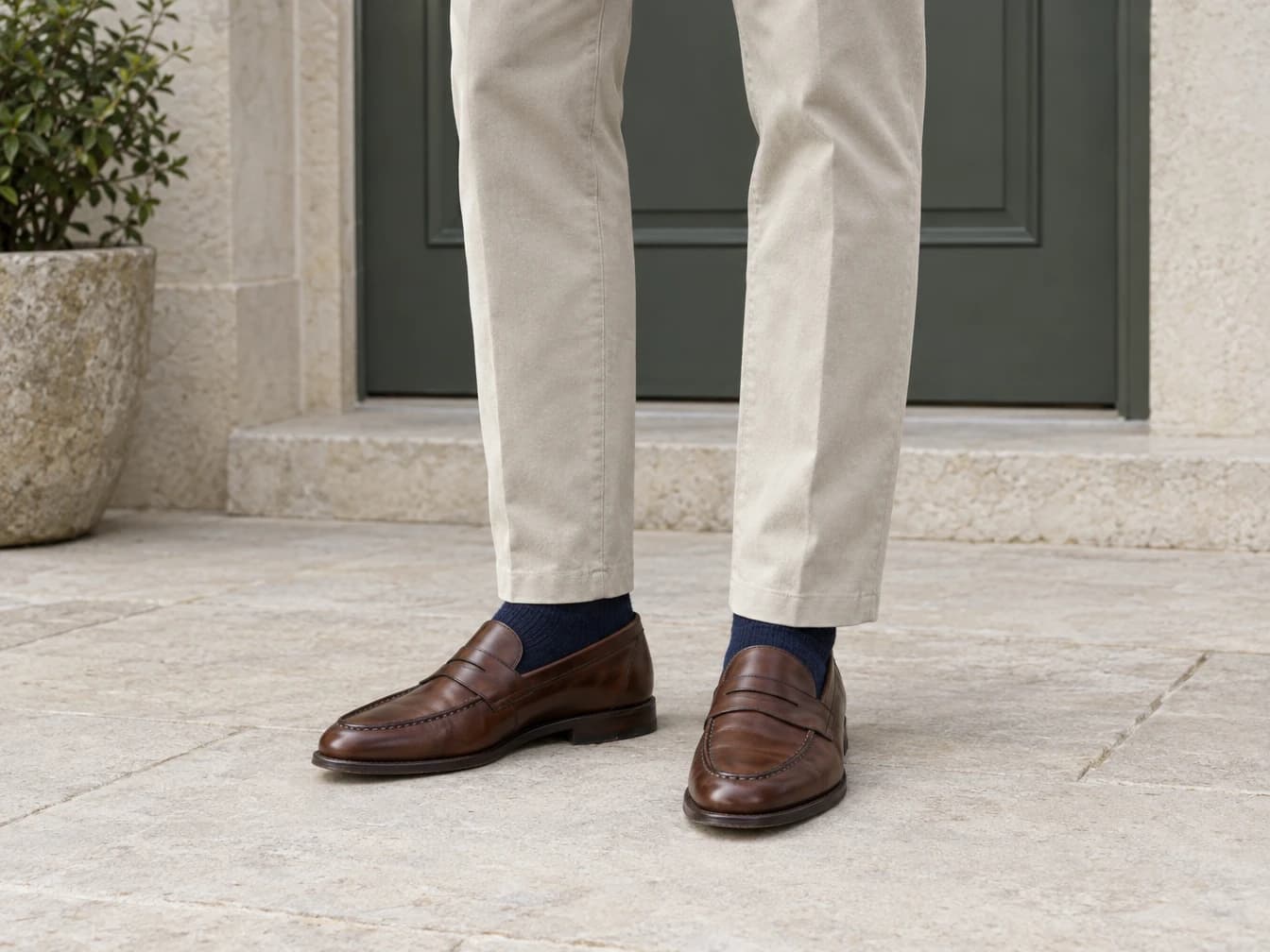
Loafers: Their lower opening can reveal more sock than a lace-up shoe at the same trouser length. Wear the socks you plan to use and look at the outfit while standing normally. Do not keep pulling the trousers down to hide the sock line.
Boots: Check whether the leg opening falls over the shaft after you walk. If it catches, extra length can gather above the boot instead of reaching farther down. Try a wider opening or another boot before assuming the inseam alone is wrong. Our chukka boot outfit guide offers useful pairing examples.
If you rotate between two very different shoes, bring both to a fitting. You may prefer a compromise length, or reserve that pair of trousers for one type of footwear.
Do a five-minute length check at home
- Set the waist first. Wear the pants where they sit comfortably and use your usual belt if needed. Empty bulky pockets.
- Put on shoes and socks. Bare feet are not a useful stand-in for the shoes that will support the hem.
- Stand naturally. Let both legs settle. Ask someone to take a straight-on and side photograph from around knee height; looking down changes your view of the proportions.
- Walk, sit and stand again. Notice whether the hem catches, stays bunched or slips under your heel. Some sock showing while seated is normal; judge your preferred standing length separately.
- Compare one small adjustment. Fold excess fabric inward to preview a shorter finish. This is a visual trial, not a cutting line. Leave the permanent marking and alteration to the person doing the work.
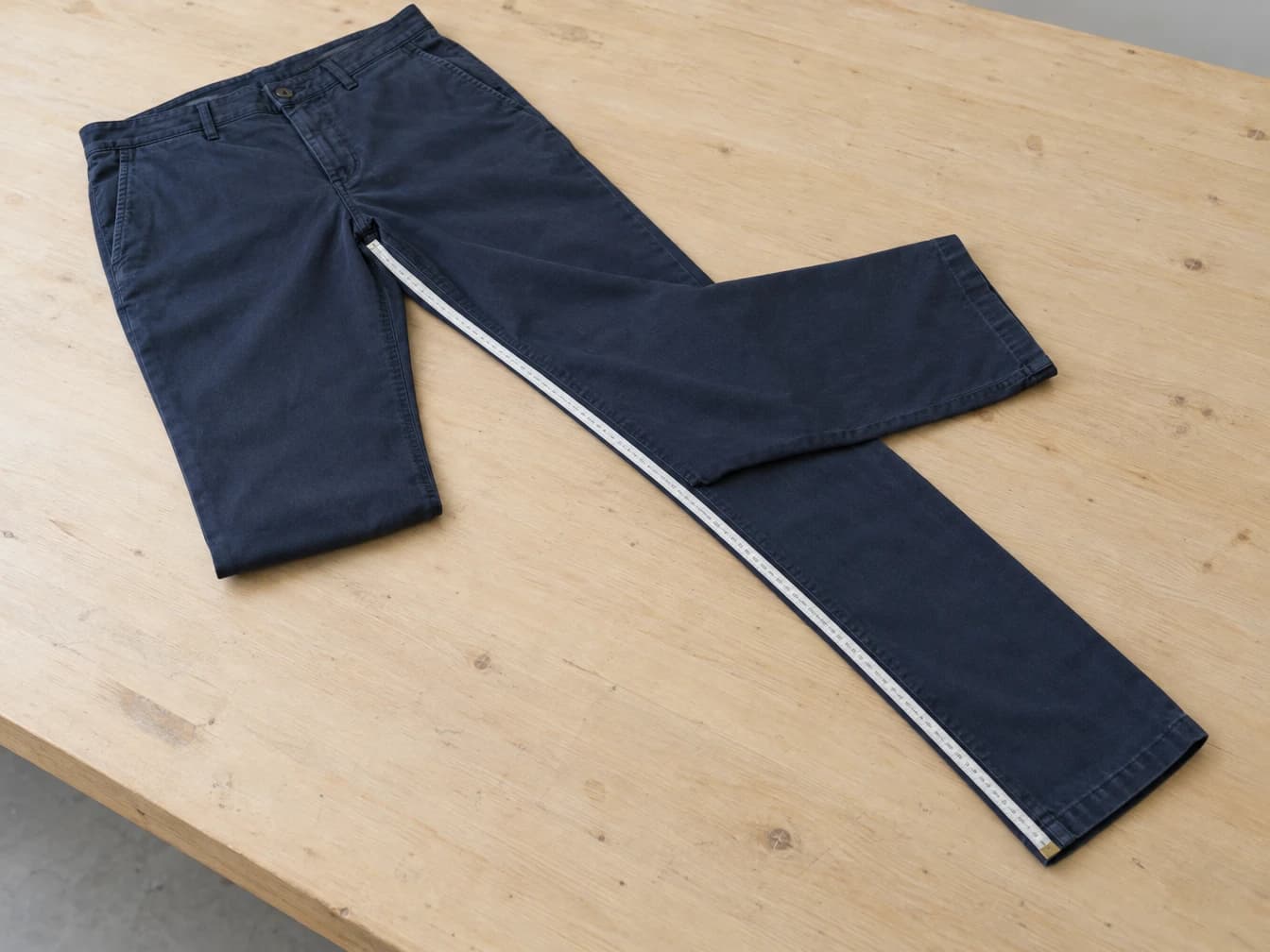
For online shopping, measure a pair you already like: lay it flat and follow the inside leg seam from the crotch junction to the hem without stretching it. Record the brand, cut and shoes that work with it. Treat that inseam as a comparison point, since another pair’s rise and leg shape can sit differently on you. Use the retailer’s own measuring directions when comparing its size chart.
What to tell the tailor
Try: “I wear these at this waist position with these shoes. I want a small front break, a clean back and no fabric under the heel. Could you pin them so I can walk and check both legs?”
Mention whether you want a plain hem or a permanent turn-up. If you currently roll your jeans, show the tailor both the rolled and unrolled versions. Ask what finish is practical for that fabric and whether enough material can remain inside for a future adjustment; do not assume a shortened pair can always be lengthened later.
Before altering washable trousers, check the care label and ask whether they should be laundered first. Do not wash dry-clean-only trousers or guess a shrinkage allowance. Fit the garment as you intend to maintain it.
Two useful shopping options
As an Amazon Associate, we earn from qualifying purchases.
SINGER 60-inch retractable tape measure. A compact soft tape for comparing a favorite pair’s inseam with a size chart. The checked listing is the red-case version. You do not need a new tape if you already have an accurate one; consistent measuring matters more than the tool’s brand.
Dockers Straight Fit Signature Lux Cotton Stretch Khaki. An everyday chino option if you need trousers as well as fit advice. The checked listing is New British Khaki in 38W × 32L; select your own measurements, not that sample size. These are different from the charcoal trousers and denim in the editorial photographs. Try them with your shoes before deciding whether to hem them, and check the current listing and return terms before buying.
Common questions
Should all my pants have the same inseam?
No. Keep a note of the measurements that work, but compare each cut on your body. The waist position, shape of the leg and shoes can change the result. A familiar number is a starting point, not proof of fit.
Are pants too short if my socks show?
Not automatically. A cropped casual outfit may intentionally show socks, and trousers rise when you sit. If you want a conventional full-length appearance, check the standing view with your chosen shoes and decide how much exposure you like.
Can I just roll chinos instead of paying for a hem?
Yes, if you like the result and the fabric makes a tidy roll. If the cuff feels stiff, heavy or keeps coming undone, compare a plain hem. A temporary roll is also a useful way to preview a shorter length before a fitting.
Does a full break mean the pants are too long?
Not by itself. A deeper break can be intentional. The practical problems are fabric dragging, slipping beneath your heel or bunching in a way you do not want. Judge the complete shape rather than treating one break category as correct for everyone.
Make the length serve the outfit
Start with one pair you wear often and the shoes you reach for most. Get the waist and leg shape comfortable, then adjust the hem. For outfit ideas after the fit is settled, explore corduroy pants outfits or the men’s wardrobe essentials guide. A well-chosen hem should make the clothes easier to wear, not give you another rule to worry about.
Sources and fit references
- Proper Cloth: What Is a Pant Break? — break terminology and the relationship between inseam, taper and shoes.
- Suitsupply: The Perfect Fit—Trousers — illustrated seat, length and boot-fit checks. Its examples are a tailoring reference, not a requirement to copy one silhouette.