Gray crew-neck T-shirt
A quiet base that works alone or under almost any casual layer. Gray is forgiving with denim, olive and brown.
Build a versatile wardrobe with clothes that work together. Start with a 15-piece capsule, explore 36 wardrobe foundations, and choose from 13 optional extras for your routine. Use the outfit mixer to find combinations for your week.
Build your wardrobe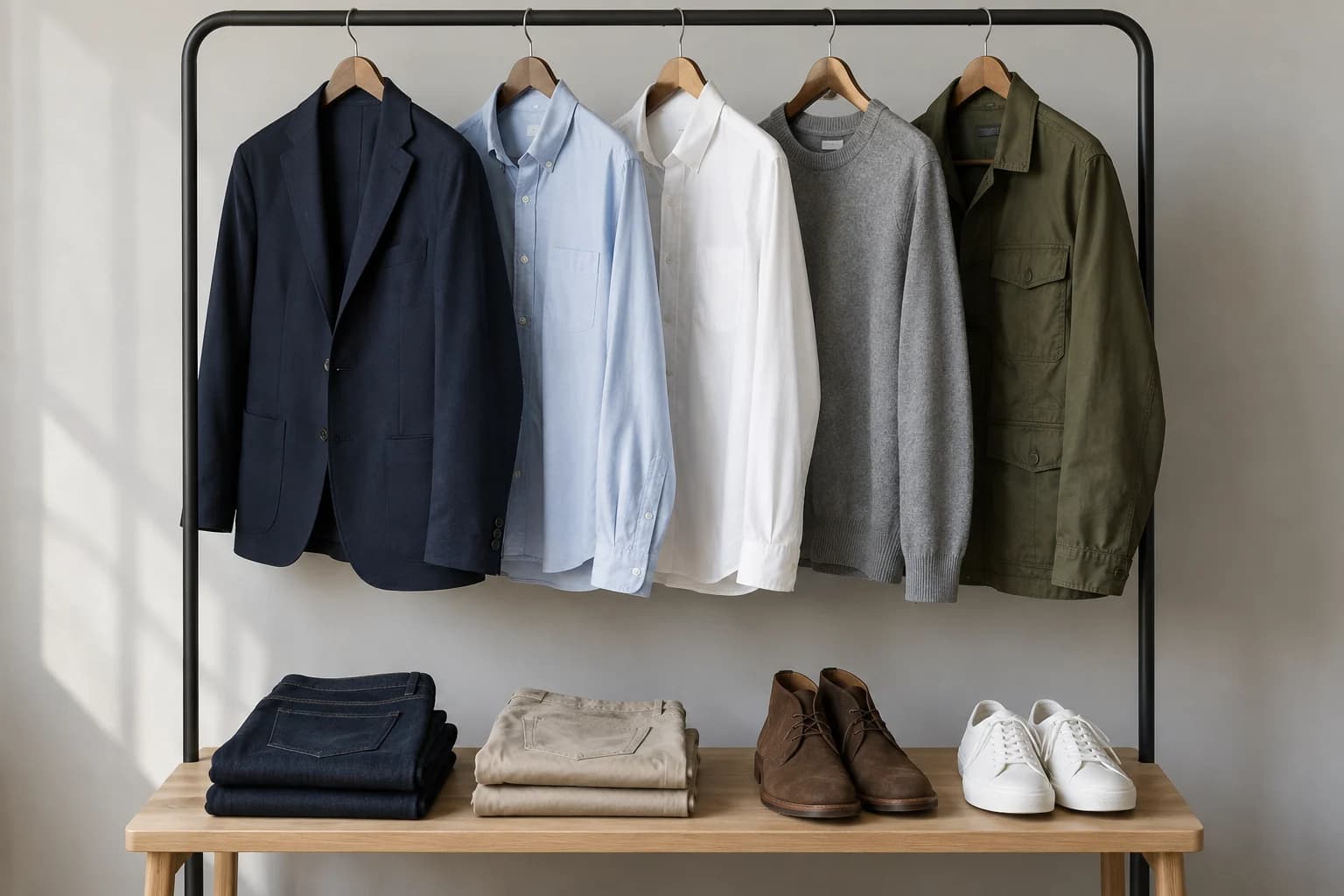
Start with the 15 core pieces you will wear most. Add the rest for your weather, work and plans.
As an Amazon Associate, we earn from qualifying purchases.
Start with neutral tees and a light-blue Oxford, then add the dress shirt or knit your week needs. Texture creates variety without making every outfit harder to combine.
Use collar, chest and sleeve measurements rather than relying only on a fit label. Brands define regular and slim differently.
White and gray are easy base layers; pale blue connects navy, olive and brown. Add a checked flannel when you want a pattern.
A quiet base that works alone or under almost any casual layer. Gray is forgiving with denim, olive and brown.
The clean starting point for casual outfits. It adds contrast under dark shirts and jackets.
A button-down collar and textured cloth make this an everyday shirt with a smarter side.
A smooth white shirt gives suits and ties a simple backdrop. Keep one ready if your work or occasions call for it.
An easy casual shirt with more visual depth than a plain tee. Useful when you want texture without a strong pattern.
A small check brings variety to a mostly solid wardrobe. Burgundy and gray sit comfortably beside navy and olive.
The most straightforward knit layer: clean neckline, useful texture, and easy color contrast.
A V-neck frames a shirt collar and gives an extra layering option for smart-casual days.
Navy is a flexible first choice. Charcoal earns its place when formal work or events make a second suit useful. Treat a suit as a matching set unless its texture and construction genuinely work as separates.
Check the shoulders and jacket proportions first; ask a tailor which alterations are realistic before buying.
Compare the jacket and trouser measurements in a set. Include alterations in your total budget.
Start with the color you will wear most. Change the shirt and tie to change the mood.
A versatile first suit for business and dressier invitations. Wear the jacket and trousers as a matching set for a coherent finish.
A second tailoring option with a quieter, darker character. Especially useful when you wear suits often enough to rotate them.
Dark denim and one pair of chinos cover a large part of a casual wardrobe. Olive, navy and light khaki give your tops different levels of contrast.
Check waist, rise, thigh and inseam together. A familiar waist number does not guarantee the same fit across brands.
Try trousers seated and with your actual shoes. Hem length should look deliberate rather than bunch heavily.
Make the base easy. Navy, stone, olive and charcoal work with a wide range of shirts and layers.
The easiest color change from denim. Olive connects pale shirts, navy layers and brown shoes.
A clean, darker trouser for days when denim feels too casual. Light tops keep the outfit from looking flat.
A pale neutral that makes navy, gray and brown pieces feel lighter. Useful for smart-casual combinations.
A clean dark wash anchors casual outfits and makes familiar shirts easy to repeat.
A scarf solves a weather need; a dress tie and knitted tie change the character of a shirt-and-jacket combination. Choose the function you use most first.
Match the scarf’s care to its fiber; wool and synthetic knits do not necessarily share washing instructions.
Tie width should feel balanced with your jacket, and the finished length should sit around the waistband.
A practical cold-weather layer that works with navy, charcoal and field-jacket colors.
One rich solid color is easier to coordinate than several competing patterns. Burgundy pairs well with navy and gray.
An open knit and dark navy color bring a quieter, more relaxed option alongside the burgundy dress tie. Add it when you wear an Oxford shirt and blazer more often than a full suit.
Optional additions for more variety or a particular occasion. Choose what fills a gap in your wardrobe.
A light camel alternative to the gray merino scarf adds warmth to navy, charcoal and olive outerwear. Choose the color and material you will wear most; a second scarf is optional.
Small white dots give plain tailoring a little pattern without another bold color. Useful for regular suit wear once you already have a solid tie.
A matte green tie adds an earthy option for weddings and dressier evenings. Its woven texture offers a different finish from both the smooth burgundy tie and the navy knit.
Choose the layer that solves your most frequent conditions. A field jacket, warm parka, vest and peacoat have different jobs; this is a menu for your climate.
Try every coat over the layers you will actually wear and check arm movement, closures and pockets.
Do not infer waterproofing from a puffer or parka shape. Check the product’s stated performance and care.
Choose for your weather: a light layer for changeable days, insulation for the cold, and suitable protection for rain.
Prioritize this when warmth and weather are the real wardrobe gap. A hooded insulated coat serves a different role from a dress coat.
A sleeveless layer adds warmth at the torso without the bulk of a full jacket. Best for mild-to-cool conditions.
A structured coat brings a smarter finish to jeans, chinos and tailoring in cool weather.
A useful casual outer layer with enough structure to finish a tee-and-trouser combination.
Optional additions for more variety or a particular occasion. Choose what fills a gap in your wardrobe.
The useful addition for wet days: a packable shell covers a job your field jacket and wool coat do not. Wear it over a shirt in mild weather or a knit when the temperature drops.
A shorter, cleaner alternative to the field jacket for casual evenings and mild spring or fall days. Choose this if you prefer a zipped jacket with a ribbed hem, rather than collecting every outerwear shape.
A textured casual alternative for weekends when a field jacket feels too outdoorsy. The medium-blue wash makes a clear contrast with the darker jeans already in the wardrobe.
Start with a comfortable everyday pair, then add the shoe that fills a different occasion. Shape, color and material change how the same trousers feel.
Try shoes with the socks you plan to wear and check the selected size conversion and width.
Desert boots bridge casual and smart-casual; canvas and retro sneakers stay relaxed; wingtips provide a dressier option.
A dependable bridge between sneakers and dress shoes. The warm leather works with denim and neutral chinos.
Decorative broguing gives dressier outfits some texture. A useful option when your week includes smart trousers or a suit.
A warm-weather casual alternative to sneakers. Their low profile works with chinos and relaxed summer clothes.
A more textured everyday shoe that keeps jeans and casual layers relaxed. Gray coordinates without demanding attention.
A simple light shoe that works across denim and chinos. The contrast freshens darker trousers and layers.
Optional additions for more variety or a particular occasion. Choose what fills a gap in your wardrobe.
A polished option for formal work and events that call for a suit. Add these when your calendar needs black dress shoes; they give the black dress belt a proper partner.
A slip-on option for days when sneakers feel too casual and lace-up dress shoes feel too formal. Add these if chinos, polos and relaxed tailoring are part of your week.
A sturdier choice for cold, wet casual days. Add these when your desert boots are too light for the conditions; their insulation makes them a seasonal option rather than an everyday warm-weather shoe.
Socks, a practical belt and a bag often earn more use than decorative extras. Keep the daily pieces simple, then add a watch, tie clip or pocket square if you enjoy wearing them.
Choose capacity, comfort and measurements first: bag size, belt length, sock range and watch dimensions matter.
Repeating a brown or black leather tone can tie an outfit together without requiring an exact match.
Choose a shape that sits securely and works with your usual outfits. Frame comfort matters as much as appearance.
A smaller wallet keeps the things you use together without filling a trouser pocket.
A simple cold-weather accessory that pairs easily with navy and olive outerwear.
A practical foundation that makes shoes comfortable and dark trousers easy to finish.
A restrained belt for darker, smarter combinations. Keep the buckle simple when wearing tailoring.
A useful finishing piece for chinos and denim that repeats the warm tone of brown footwear.
A practical carry option for the commute and ordinary errands. Choose capacity around what you actually take with you.
A clear dial and restrained strap work across casual and smart-casual clothes. One comfortable watch is enough to start.
A small functional accessory that keeps a tie in place. Use it sparingly so it complements the outfit.
A clean finishing detail for a jacket without adding another strong color. A simple fold is an easy starting point.
Optional additions for more variety or a particular occasion. Choose what fills a gap in your wardrobe.
A dark-brown belt with restrained edging gives you another polished option for tailored trousers. Add it when the deeper brown works better with your dress shoes than your everyday belt.
A steel bracelet gives you a different finish from the brown leather watch. Choose it as an alternative when you want one watch to work with either black or brown accessories.
Cushioned crew socks are a useful counterpart to thin dress socks. Add them for sneakers, walking and casual days when you want more padding.
A small argyle pattern adds interest beneath plain trousers. Add these once your everyday solid socks are covered, and let the socks be the outfit’s quieter pattern.
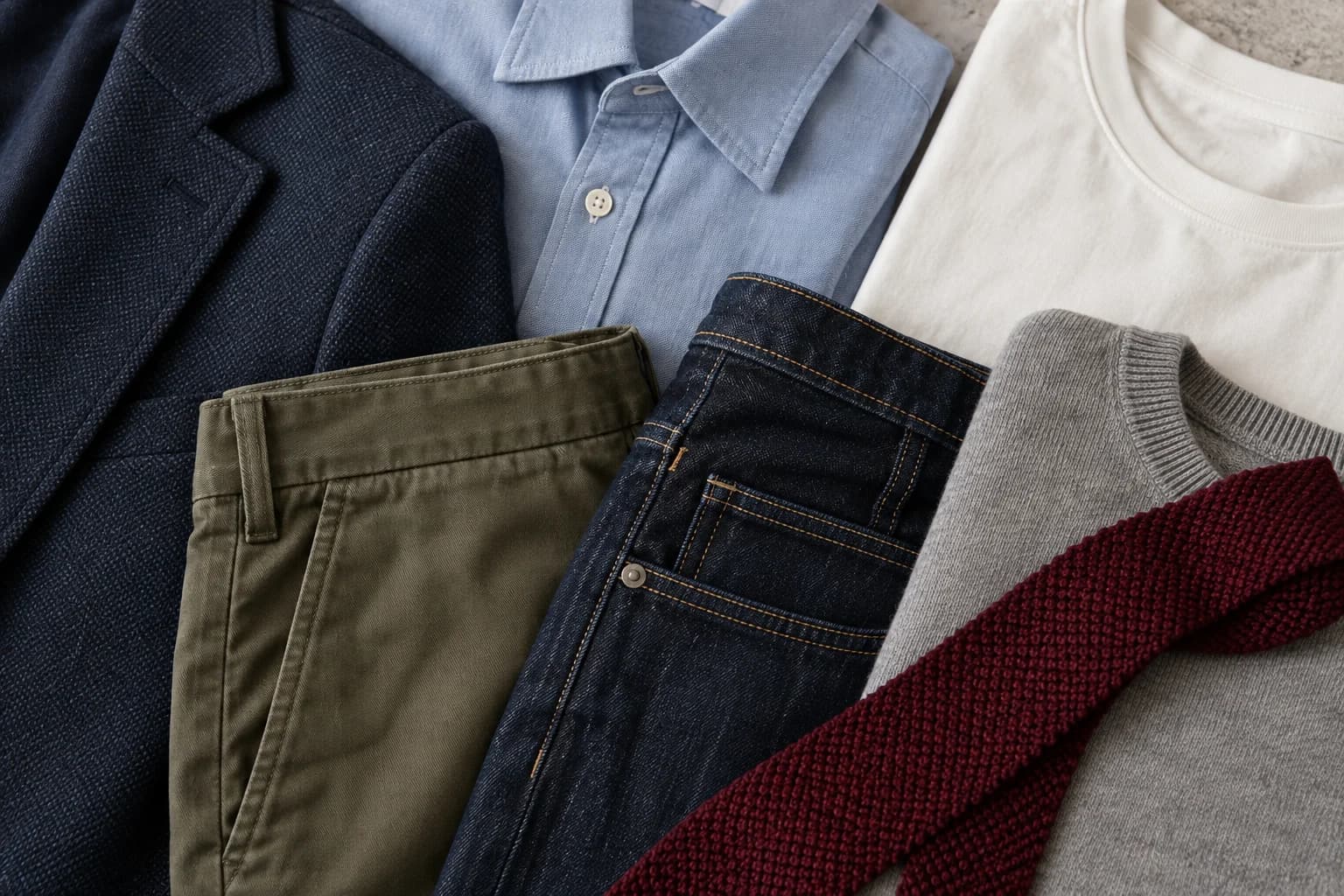
Steve Harvey’s familiar five-suit idea shows the appeal of choosing clothes that mix. The useful lesson is to repeat a small palette—then check texture, fit and occasion before treating pieces as interchangeable.
A clear foundation for a suit and shirt, or navy chinos and a white tee.
A relaxed pairing for chinos and an Oxford shirt. Brown footwear warms it up.
Easy for a tee or knit with jeans; white or gray sneakers keep it casual.
Light trousers separate clearly from a dark top. Keep fabrics appropriate to the occasion.
A small burgundy tie adds color to dark tailoring without a competing pattern.
Brown belts and shoes repeat a warm accent beside blue shirts and denim.
A navy suit jacket is not automatically a navy blazer. Textured, casually constructed tailoring is often easier to separate than a smooth business suit. Keep matching suit pieces together when the combination looks forced.
Choose an occasion. Lock a piece you want to keep, then explore combinations that work with it.
Casual
White and olive keep the base light; a khaki utility layer adds structure.
Leave the jacket open or carry it when the day warms up.
As an Amazon Associate, we earn from qualifying purchases.
There is no single right number of clothes. Use the guide around your climate, work and preferences.
Start with comfortable tees, an everyday shirt, dark jeans, one pair of chinos and useful shoes. Add the layer your weather needs, then tailoring or extra shirts for your job and calendar.
No. Start with the 15-piece capsule and clothes you already own. The 36 wardrobe foundations cover different routines, weather and dress codes; 13 optional extras add color, texture or a different practical use. Pick the options that fill a real gap. A camel cashmere scarf can replace the gray wool scarf rather than becoming another must-buy.
One navy or charcoal suit can be enough for occasional events. A second makes sense when you wear tailoring regularly. Someone with a very casual routine may prioritize outerwear and everyday footwear first.
Color compatibility helps, but texture and construction matter too. A smooth business-suit jacket can look out of place with casual trousers. Keep a suit together when it works best as a set, and choose a separate blazer when you want that role.
Compare garment measurements with clothes that fit you, check the selected size and color, and read the brand’s size chart and return terms. Try shirts while reaching and trousers while sitting, not just standing in a mirror.
Navy, gray, white, pale blue, olive and a light khaki are a flexible starting palette. Repeat a brown or black leather tone in accessories, then add a favorite accent color where it fits your style.
Prioritize the pieces you wear most, especially comfortable shoes, an appropriate weather layer and useful alterations. Compare material, construction and care needs; a higher price alone does not establish better quality.
Follow each care label. Store knits and structured jackets appropriately, keep dark denim separate from light laundry when needed, and use shoe care suited to the actual material. Regular small repairs help useful pieces stay in rotation.
A useful wardrobe grows around your days, not a fixed shopping list. Choose fit first, buy for the occasions you actually have, and give the pieces you enjoy enough care to last.
Product details and fit vary by listing. These selections are starting points; check the chosen size, color and materials before ordering.
Brooks Brothers: men’s shirt size and fit guideManufacturer guidance for comparing shirt measurements and fit options; use the size chart for the actual brand you buy.Levi’s: product size guideExplains how waist, inseam and named fits differ. Supports comparing measurements rather than relying on a fit label.Woolmark: wool washing and careCare, drying and storage guidance for wool; follow the garment’s own care label.Clarks: shoe care guideHow to clean and protect leather, suede and nubuck using material-appropriate care.Proper Cloth: how the shoulders and yoke should fitExplains shirt shoulder placement and movement through the upper back.Alan Flusser Custom: the versatility of casual suitsShows why texture and construction affect whether a suit works as separates; color alone does not decide compatibility.Steve Harvey: the five-suit mixing ideaThe original mix-and-match reference. Our examples are curated combinations, not a claim that every possible pairing works.