The Famous Outfits style guide
Overshirt Outfits for Men: 6 Ways to Layer a Shirt Jacket
An overshirt is useful when a tee feels too bare and a coat feels like too much. These six combinations show how the same shirt-jacket shape changes with its base layer, trousers and shoes.
By Famous Outfits · October 12, 2026
Start here
Start with what goes underneath
Wear an overshirt over a plain tee, Oxford, fine knit or lightweight hoodie, then add jeans or chinos and shoes that suit the setting. Navy with blue jeans and sneakers is an easy everyday formula; olive with stone chinos and loafers is neater. Fit matters more than the label: the overshirt should sit comfortably over its base layer without tight buttons or restricted sleeves.
Easy overshirt color combinations
Choose a layer that separates clearly from your trousers. The combinations below give you a starting point; compare your actual pieces in daylight.
Navy
An easy first overshirt color.
Try it: White tee + medium-blue jeans
Olive
A muted alternative to denim blue.
Try it: Pale blue shirt + stone chinos
Charcoal
Soft contrast with black basics.
Try it: Black tee + black jeans
Tan
Warmth and texture in corduroy.
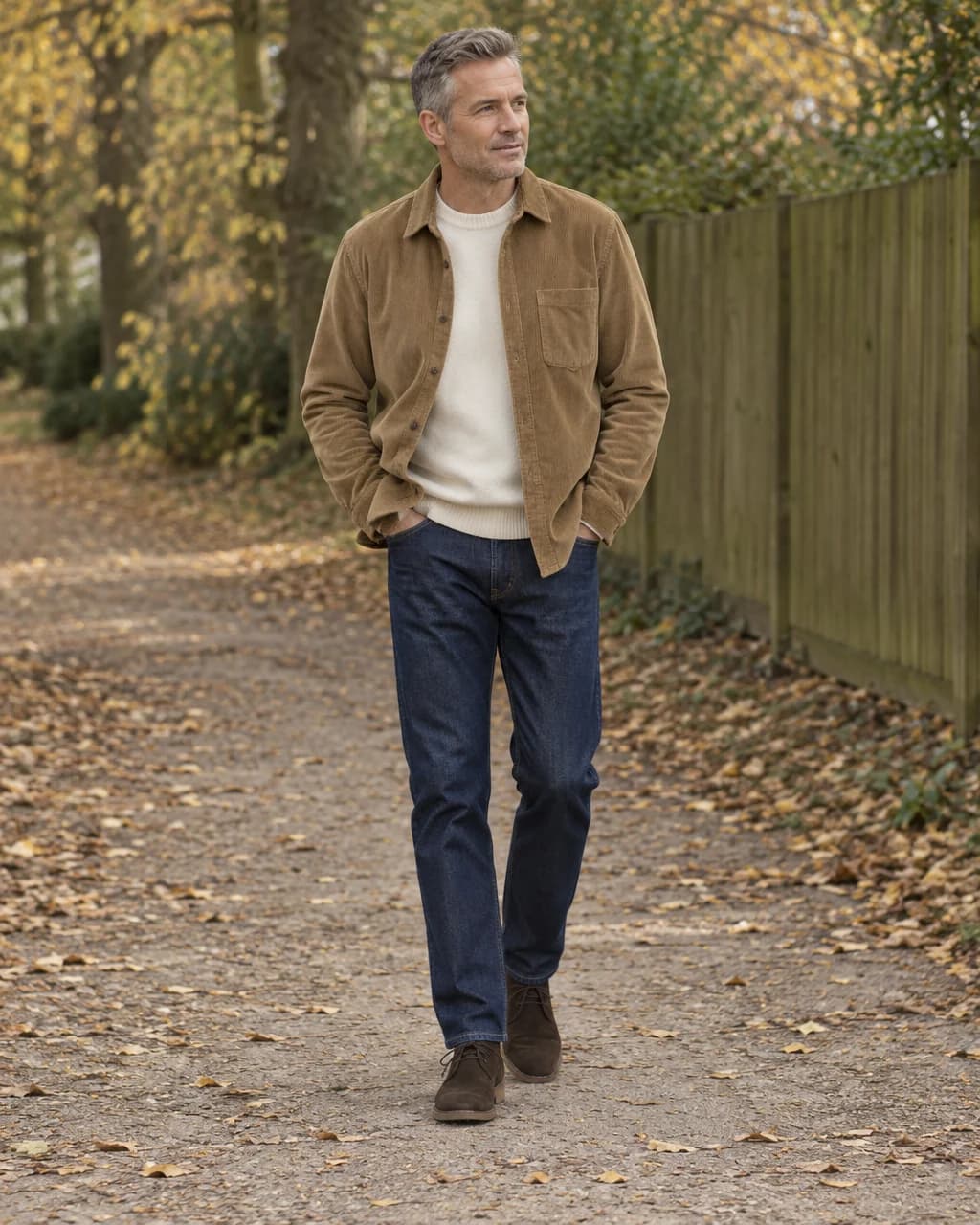
Try it: Ivory knit + dark jeans
Coffee
A dark layer for light trousers.
Try it: Cream tee + stone chinos
Separate similar colors
A navy overshirt and jeans work best when the wash or texture is clearly different. You do not need an exact match; deliberate contrast is easier to wear.
Keep the base layer quiet
White, cream, grey and black give the overshirt room to carry the outfit. Add a pattern only when the surrounding pieces are simple.
Use shoes to set the tone
Sneakers, suede boots and loafers can work with the same shirt jacket. Choose for the setting first, then repeat a useful dark or light tone from the outfit.
6 overshirt outfits, from weekends to dinner
Each formula includes a base layer, trousers and shoes. The photos illustrate the styling; linked pieces are similar shopping options, with differences noted rather than exact-match claims.
Compare the outfits at a glance
| Outfit | Best for | The formula |
|---|---|---|
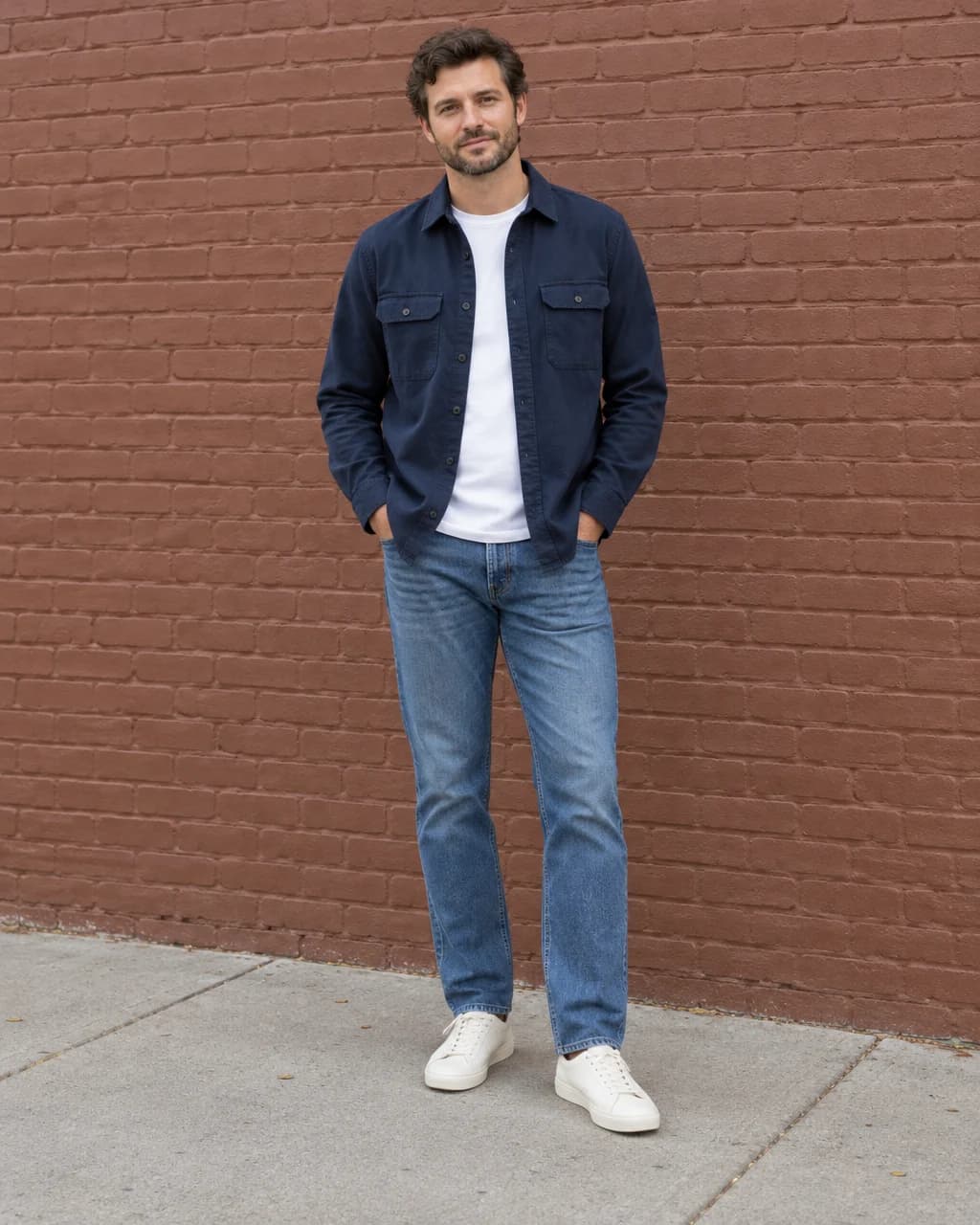
| Navy overshirt, blue jeans and white sneakers | Everyday weekends | Navy overshirt + white tee + straight blue jeans + white sneakers |
| Olive overshirt with an Oxford and stone chinos | A casual office | Olive overshirt + blue Oxford shirt + stone chinos + brown loafers |
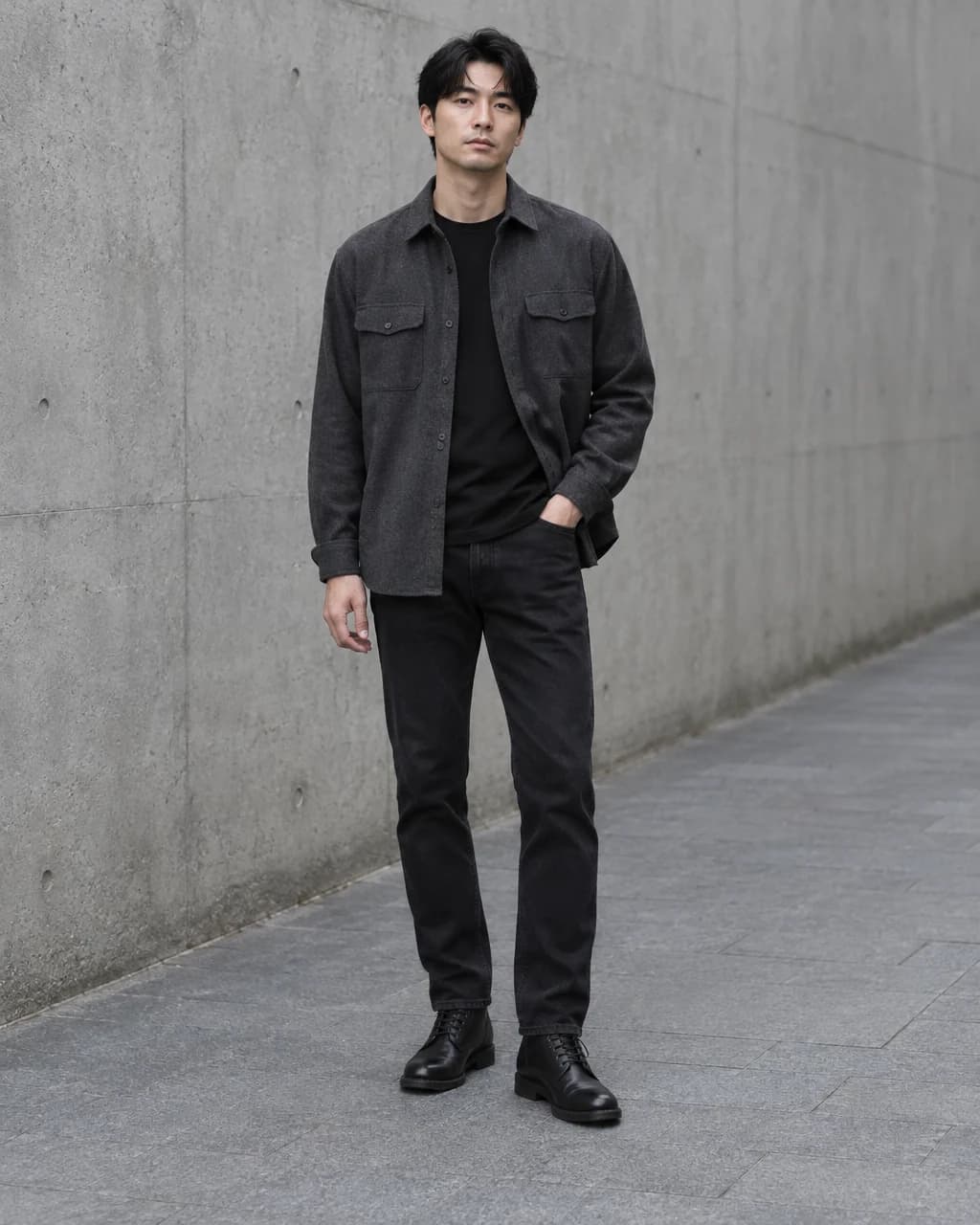
| Charcoal overshirt over black basics | An evening walk or casual bar | Charcoal overshirt + black tee + black straight jeans + black boots |
| Tan corduroy over a cream knit | A dry, cool afternoon | Tan corduroy overshirt + ivory crewneck + dark jeans + suede desert boots |
| Navy overshirt over a grey hoodie | Travel days and easy errands | Navy overshirt + grey hoodie + relaxed olive chinos + white sneakers |
| Coffee brown with light chinos and loafers | A relaxed dinner | Brown overshirt + cream tee + stone chinos + brown loafers |
As an Amazon Associate, Famous Outfits earns from qualifying purchases. Shop similar pieces to recreate each look; the photos do not depict the exact linked products. Check your size, color, and current price on Amazon.
01 / Everyday weekends
Navy overshirt, blue jeans and white sneakers
Navy overshirt + white tee + straight blue jeans + white sneakers
A navy overshirt gives a plain tee more structure without making jeans feel dressed up. Keep the denim noticeably lighter than the shirt jacket so the two blue pieces read separately. The straight leg balances the boxier top and leaves the low sneakers visible.
Make it yours. Wear the overshirt open. If the tee hangs well below it, try a shorter tee or a light front tuck rather than folding the outer hem.
Shop this outfit 4 pieces
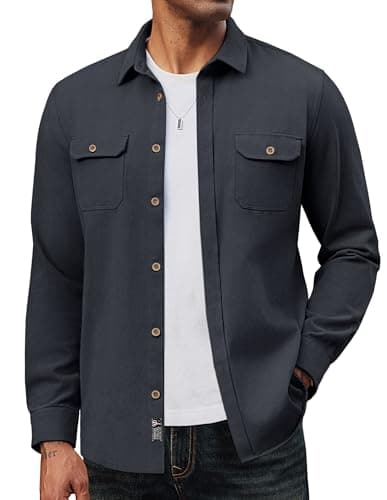 PJ Paul JonesNavy lightweight overshirtNavy blue listing (spelled “Bavy Blue”); lightweight alternative. Check fabric composition and chest measurements; the photo illustrates a cotton-twill look.View on Amazon
 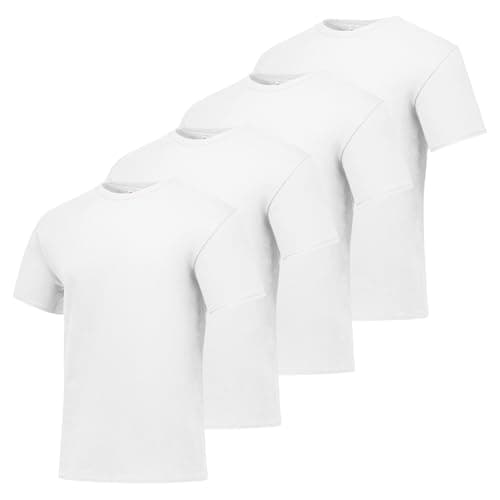 HanesWhite crewneck T-shirtsEssentials white multipack, checked Large. Wear one as the base layer; choose an opaque comfortable fit. White is brighter than the cream dinner base layer shown.View on Amazon
 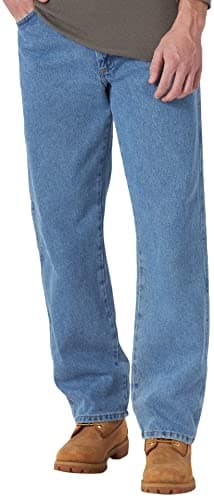 RustlerStonewash regular jeansStonewash, regular fit; checked 36W × 32L. Choose your inseam so the hem meets the sneaker without heavy stacking.View on Amazon
  Thursday Boot CompanyWhite low-top sneakersPremier Low Top, White, checked men’s 10. Brighter white than the off-white shoes in the photos.View on Amazon
02 / A casual office
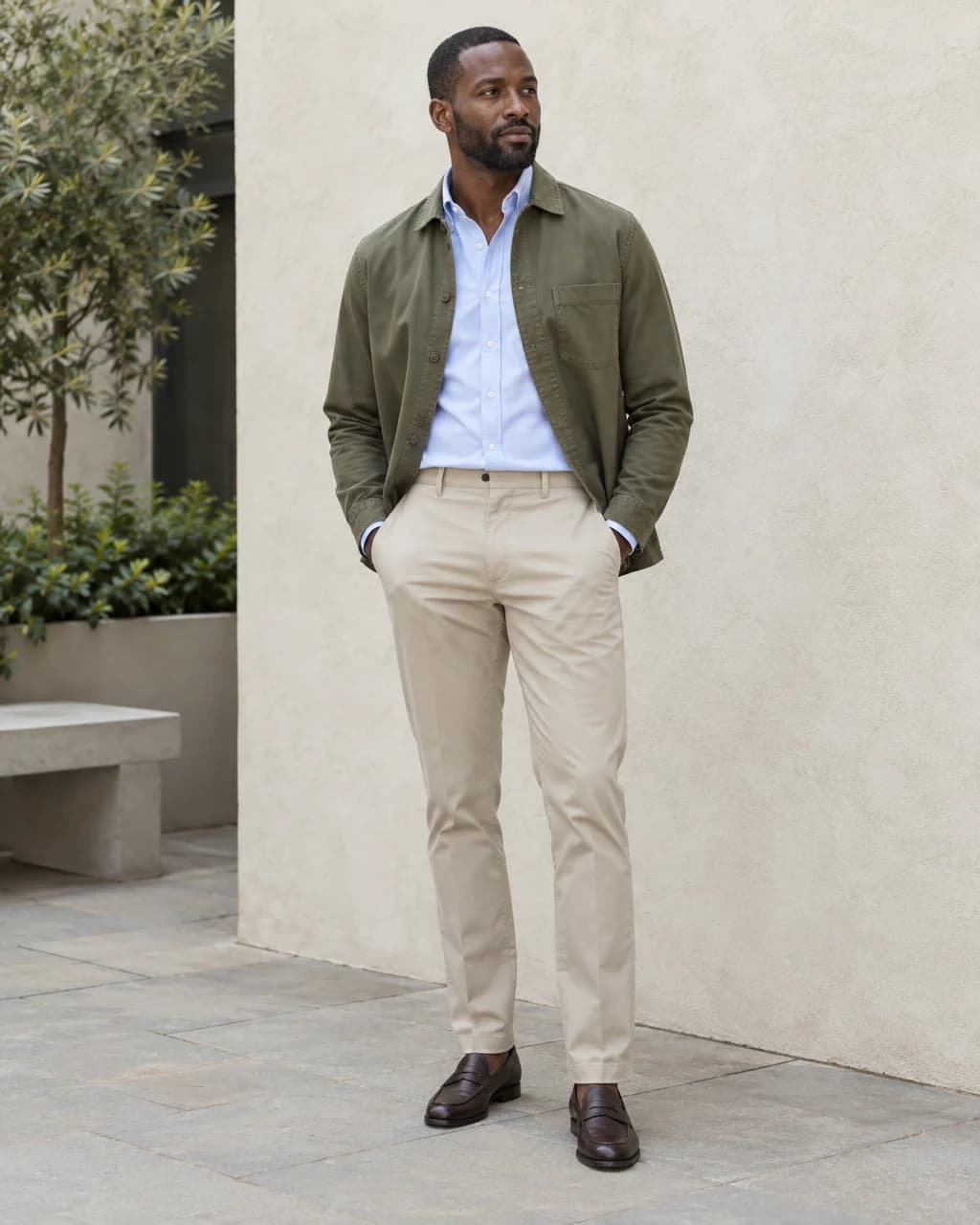
Olive overshirt with an Oxford and stone chinos
Olive overshirt + blue Oxford shirt + stone chinos + brown loafers
For an office where shirt jackets are welcome, use a quiet color palette and tidy trousers. Pale blue separates the two collars, while stone chinos keep the olive layer from looking too utilitarian. Brown penny loafers make a useful step up from sneakers.
Make it yours. Keep the Oxford collar inside the overshirt collar and tuck the shirt. A lined shopping option will run warmer; choose an unlined layer for heated offices.
Shop this outfit 4 pieces
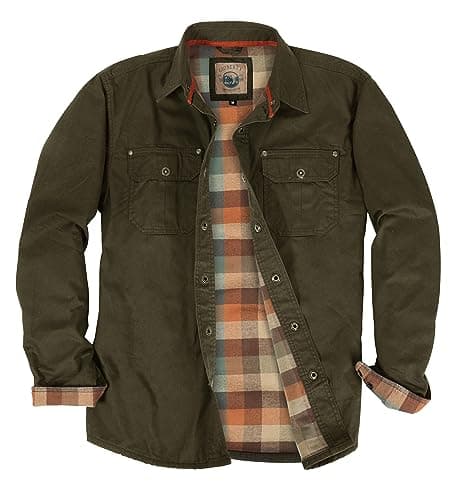 GiobertiOlive twill shirt jacketOlive, cotton twill with flannel lining; warmer than the unlined styling photo. Checked XL; select your size.View on Amazon
  Amazon EssentialsBlue Oxford shirtBlue; regular fit with a button-down collar.View on Amazon
 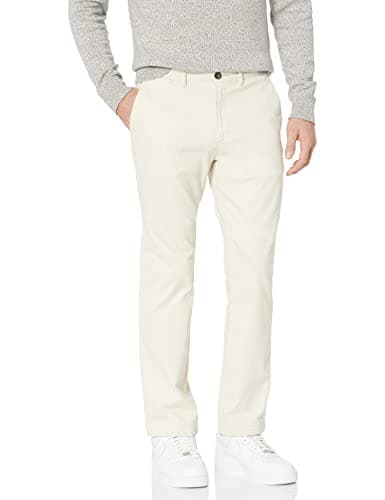 Amazon EssentialsStone straight chinosStone, straight fit; checked 40W × 30L. Choose waist and inseam rather than copying the sample size.View on Amazon
 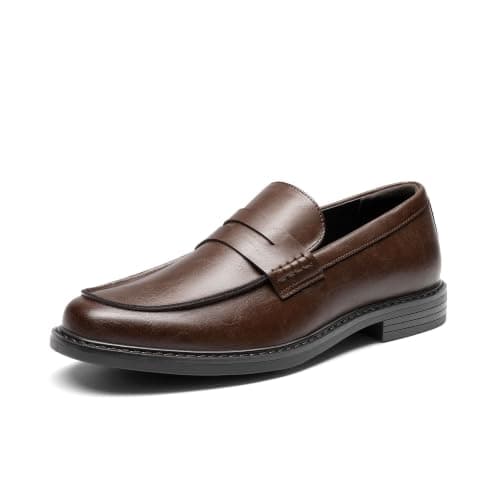 Bruno MarcDark brown penny loafersDark Brown, checked men’s 11. Similar styling option; verify the upper material on the selected listing.View on Amazon
03 / An evening walk or casual bar
Charcoal overshirt over black basics
Charcoal overshirt + black tee + black straight jeans + black boots
A slightly lighter overshirt stops an almost-black outfit from becoming one flat block. Let the pockets and matte fabric supply the detail; extra patterns are unnecessary. Straight jeans should fall over the boot shaft instead of catching on its top edge.
Make it yours. Check the pieces together in daylight. If the charcoal is almost identical to the jeans, a washed black tee or more textured overshirt can create separation.
Shop this outfit 4 pieces
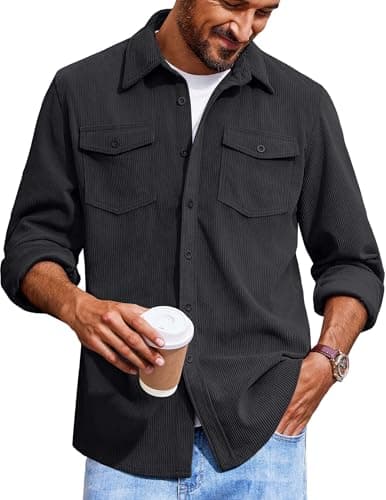 COOFANDYDark grey overshirtDark Gray, flap-pocket style; check garment measurements and fiber content.View on Amazon
 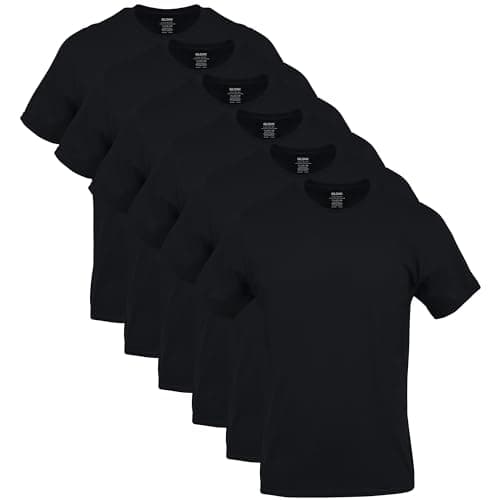 GildanBlack crewneck T-shirtsBlack multipack, checked Medium. Choose a comfortable fit rather than tight undershirt sizing.View on Amazon
 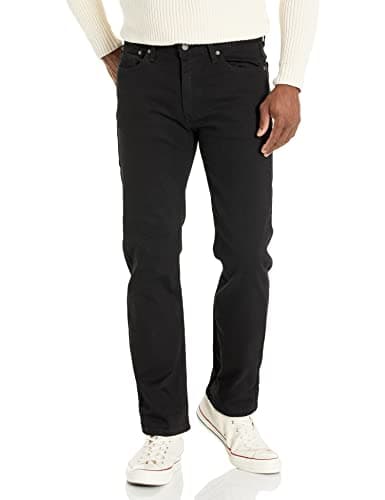 Levi’sBlack straight jeans514 Straight, Native Cali Black Denim; checked 34W × 30L.View on Amazon
  Thursday Boot CompanyMatte black lace-up bootsCaptain, Black Matte, checked 9.5. Cap-toe and sole details differ from the styling photo.View on Amazon
04 / A dry, cool afternoon
Tan corduroy over a cream knit
Tan corduroy overshirt + ivory crewneck + dark jeans + suede desert boots
Corduroy supplies the texture, so a smooth fine knit keeps the layers comfortable. Dark jeans ground the warm tan and cream, while brown suede boots echo the soft surface without matching every shade. This is a dry-weather outfit, not rain protection.
Make it yours. Try the overshirt on over the knit you intend to wear. If the sleeves bind when you reach forward, choose a roomier cut or a thinner sweater.
Shop this outfit 4 pieces
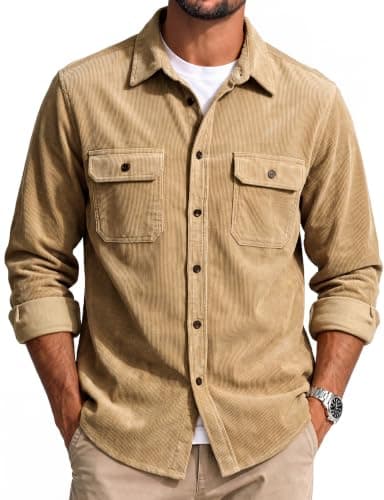 VATPAVETan corduroy shirt jacketTan cotton corduroy, checked Large. Choose room for a fine sweater underneath.View on Amazon
 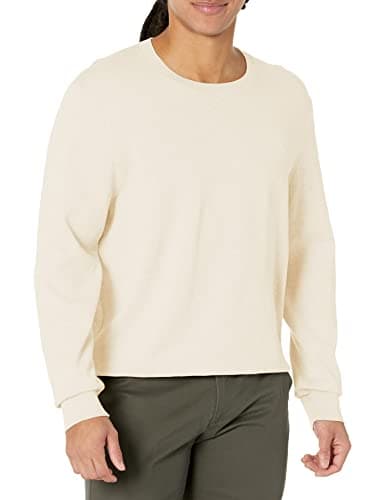 Calvin KleinIvory crewneck sweaterCompact Cotton Crewneck, Ivory. A smooth knit alternative; check the selected size.View on Amazon
  GAPDark-wash straight jeansDark Wash, straight fit; checked 33W × 30L. Wash can look lighter than the deep indigo in the photo.View on Amazon
 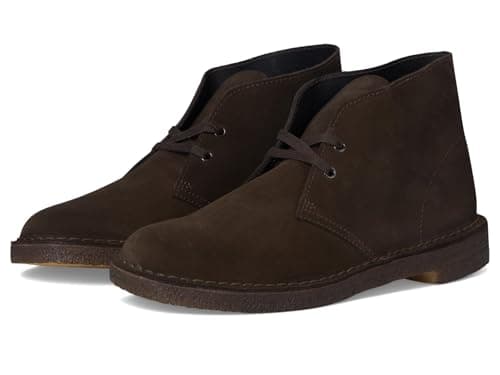 ClarksBrown suede desert bootsBrown suede; a close alternative to tobacco.View on Amazon
05 / Travel days and easy errands
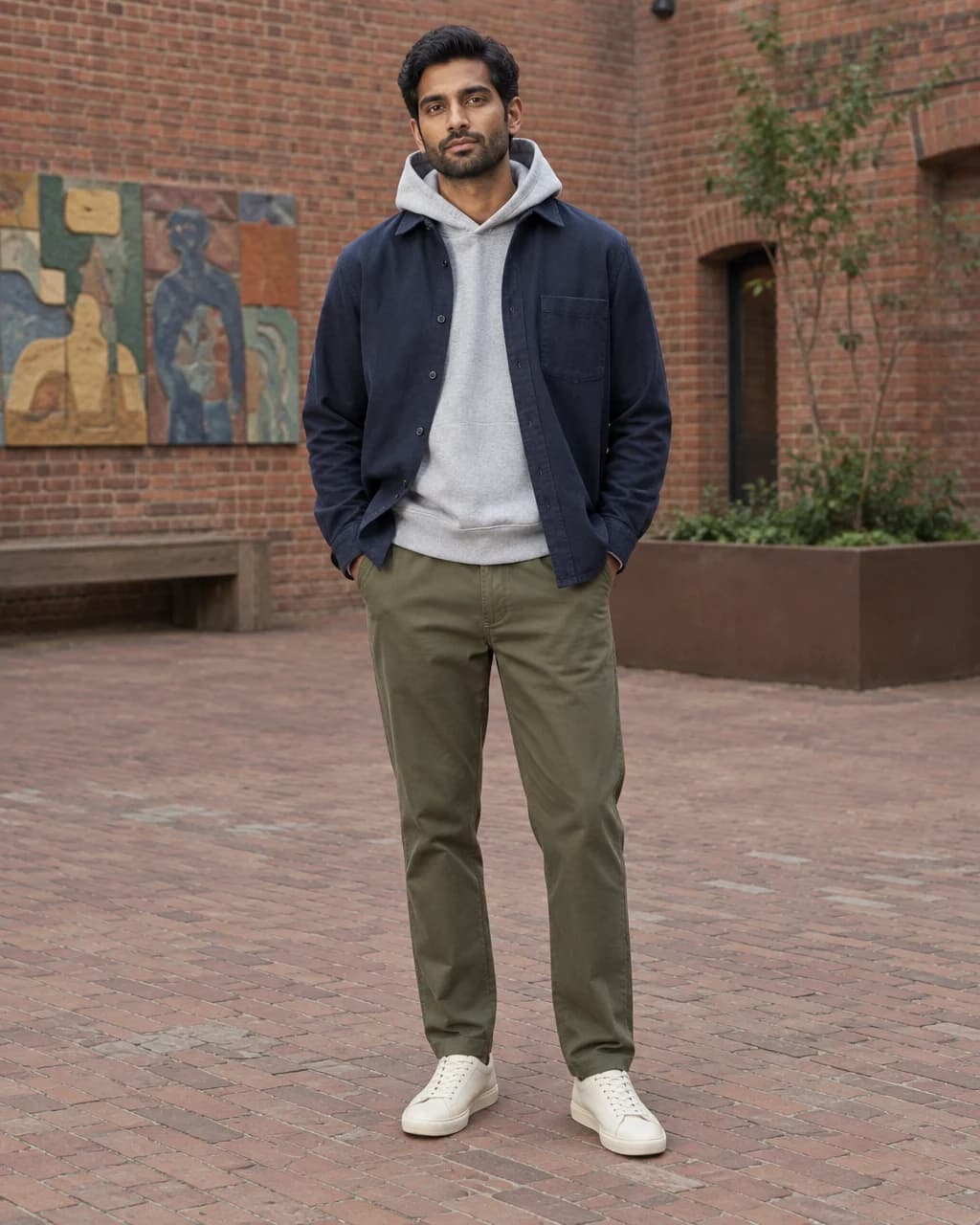
Navy overshirt over a grey hoodie
Navy overshirt + grey hoodie + relaxed olive chinos + white sneakers
A hoodie makes the overshirt feel more casual, but the combination only works if the outer layer has enough room. Relaxed chinos balance the extra volume above the waist. Navy, grey and olive give each piece a clear role without a loud print.
Make it yours. Leave the overshirt open and pull the hood outside the collar. If the sleeves bunch or the shoulder seams strain, use a lighter hoodie rather than forcing the buttons closed.
Shop this outfit 4 pieces
- PJ Paul JonesNavy lightweight overshirtNavy blue listing (spelled “Bavy Blue”); lightweight alternative. Check fabric composition and chest measurements; the photo illustrates a cotton-twill look.View on Amazon
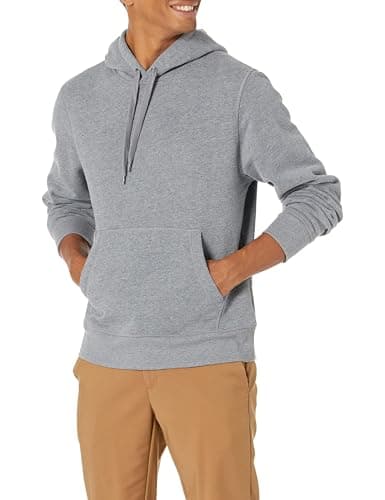 Amazon EssentialsLight grey hoodieLight Grey Heather, checked Large. Check bulk at shoulders and upper arms before layering.View on Amazon
 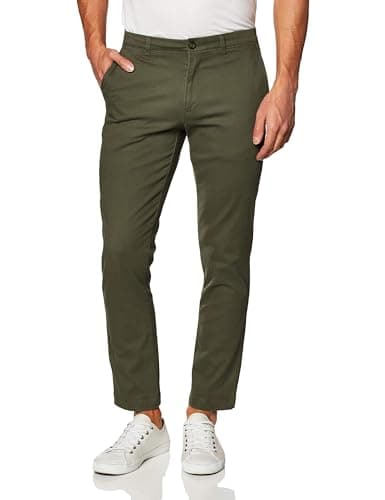 Amazon EssentialsOlive relaxed chinosOlive, relaxed fit; checked 36W × 32L.View on Amazon
 - Thursday Boot CompanyWhite low-top sneakersPremier Low Top, White, checked men’s 10. Brighter white than the off-white shoes in the photos.View on Amazon
06 / A relaxed dinner
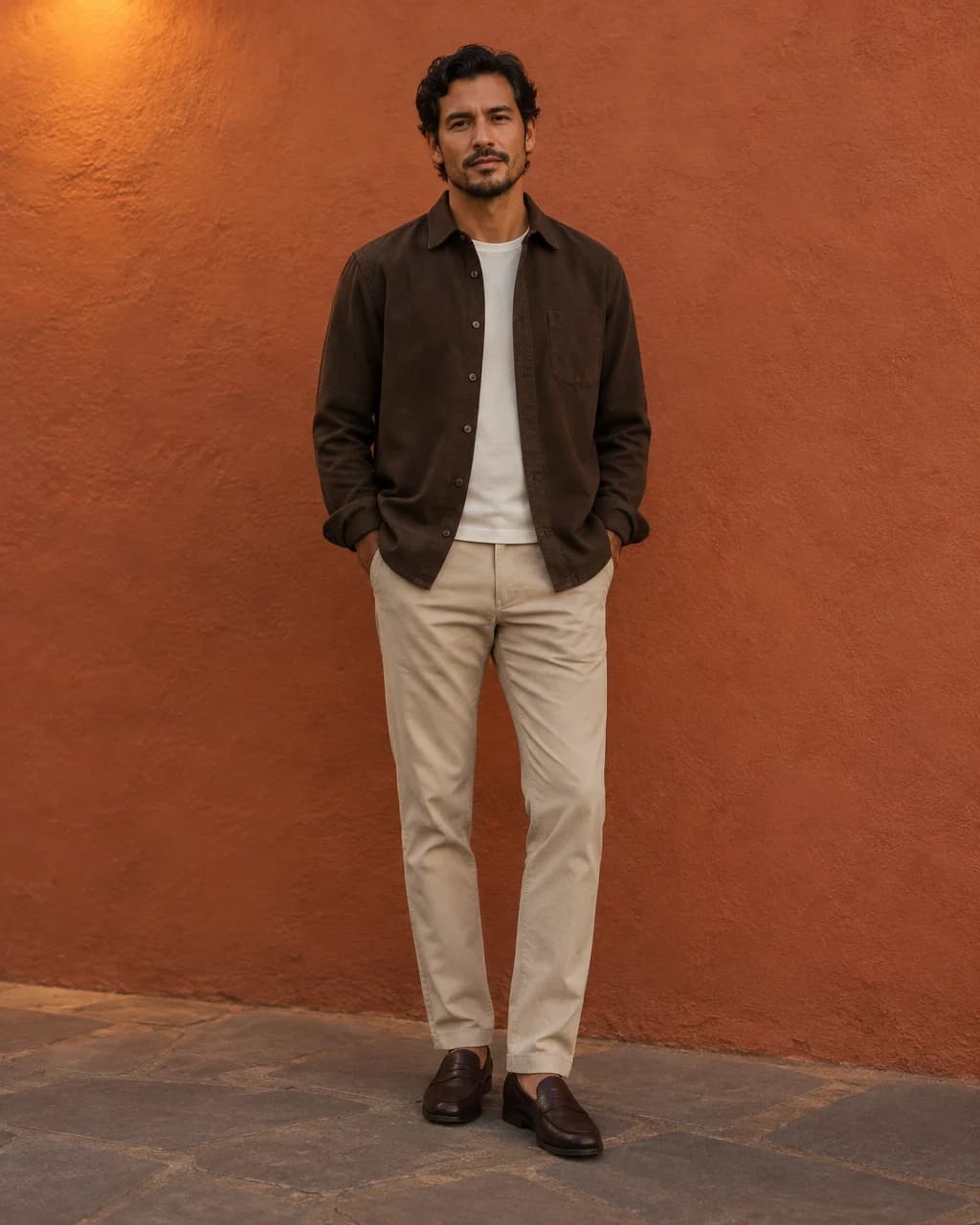
Coffee brown with light chinos and loafers
Brown overshirt + cream tee + stone chinos + brown loafers
Light trousers make a dark brown overshirt feel deliberate enough for an informal dinner. Keep the tee plain and the shoes clean. A simple pocket arrangement and a hem that sits around the hips read neater than a long, heavily padded shirt jacket.
Make it yours. Wear it open as shown, or fasten the middle buttons if the fabric lies flat. This replaces a casual jacket; follow the venue’s dress code when a blazer or suit is expected.
Shop this outfit 4 pieces
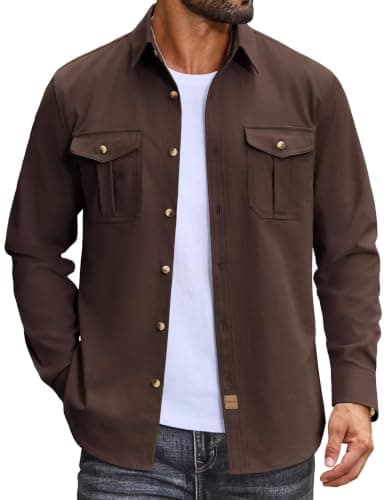 COOFANDYCoffee brown overshirtCoffee brown, long sleeves and chest pockets. A similar color formula; fabric and shade may differ from the photo.View on Amazon
 - HanesWhite crewneck T-shirtsEssentials white multipack, checked Large. Wear one as the base layer; choose an opaque comfortable fit. White is brighter than the cream dinner base layer shown.View on Amazon
- Amazon EssentialsStone straight chinosStone, straight fit; checked 40W × 30L. Choose waist and inseam rather than copying the sample size.View on Amazon
- Bruno MarcDark brown penny loafersDark Brown, checked men’s 11. Similar styling option; verify the upper material on the selected listing.View on Amazon
Build a small wardrobe that mixes easily
One well-fitting overshirt can work several ways. Build around the trousers and shoes you already own before adding more colors.
One overshirt
Navy or olive, with room for your usual base layer
A versatile color is more useful than several ill-fitting options.
Two base layers
Plain tee and a fine crewneck knit
Change warmth without changing the whole outfit.
Two trouser options
Straight jeans and stone or olive chinos
They cover casual and slightly smarter combinations.
Everyday shoes
Clean low-top sneakers
An easy match for open overshirt outfits.
A smarter shoe
Brown loafers or suede desert boots
Choose the pair that suits your climate and usual venues.
Before buying, make three combinations from the pieces on your list. If a new shirt only works with trousers you do not own, it may be less useful than a replacement for something you wear every week. Fabric care and comfortable fit deserve as much attention as color.
Choose fabric for the weather
An overshirt describes a shape, not a guaranteed level of warmth.
Mild days: light and unlined
A lighter cotton or blended overshirt over a tee is easy to remove indoors. Check actual fabric and lining; product names such as “shirt jacket” do not tell you the full weight.
Cool days: texture without crowding
Corduroy or a lined twill layer works with a fine sweater. Keep the inner layer smooth enough that the sleeves slide rather than bunch.
Cold or wet days: add proper outerwear
Use an overshirt under a roomy coat when it is comfortable. Do not assume cotton twill, corduroy or a fashion shirt jacket will keep rain out.
Check the fit before the color
Reach forward and sit down
Try the overshirt over the intended base layer. The upper back should allow movement, and the buttons should not pull when you sit.
Check cuffs and sleeve bulk
Sleeves should finish around the wrist without covering most of your hands. A thick hoodie can make a previously comfortable sleeve too tight.
Balance hem and trouser shape
Hip-length overshirts are easy with straight trousers. Longer, boxier versions need enough trouser volume to look deliberate; check the whole silhouette with shoes on.
Fix common overshirt problems
The outfit feels bulky
Reduce one layer: try a lighter tee or fine knit, leave the overshirt open, or choose an unlined version. Sizing up cannot fix every mismatch in sleeve shape.
The two collars look crowded
Tuck the inner collar inside the outer collar. If it keeps escaping or bunching, use a collarless base layer or a roomier neckline.
It looks like an untucked office shirt
Look for an outer-layer cut, a substantial fabric and a hem that works untucked. Pair it with a clearly visible base layer and trousers suited to the intended casual setting.
Men’s overshirt FAQs
A few useful answers before you choose your next outfit.
What is an overshirt?
An overshirt is a shirt-shaped outer layer, usually cut with more room and made from a more substantial fabric than a standard shirt. It often has chest pockets and a relatively straight hem. The label is inconsistent, so check measurements, lining and fabric rather than assuming every overshirt fits the same way.
What should men wear under an overshirt?
A crewneck tee is the easiest starting point. A fine sweater adds warmth without much bulk, an Oxford works in a casual office, and a hoodie makes the outfit more relaxed. Put the intended layer on before checking whether you can comfortably move your arms and fasten the overshirt.
Should an overshirt fit loose or tight?
It should have enough room for its intended base layer without pulling across the chest or upper back. A deliberately relaxed shoulder is fine if the sleeves and body still suit you. Tight buttons, restricted reaching and bunched sleeves are more useful warning signs than a size label.
Should you size up for an overshirt?
Not automatically. Some brands already add layering room; others use ordinary shirt measurements. Compare a garment you like with the listed chest, shoulder, sleeve and back lengths. If you need room for a hoodie, look for a roomier cut before assuming a larger size will also have the right sleeve length.
Do you wear an overshirt open or buttoned?
Both work. Open styling shows the base layer and is comfortable with a knit or hoodie. Buttoning the middle of a clean, unlined overshirt can look neater, provided the placket stays flat. Leave it open if fastening it causes pulling or changes how the hem hangs.
Can you wear an overshirt with a collared shirt?
Yes, particularly with a soft Oxford. Keep the inner collar inside the outer one and use a lighter, less bulky shirt underneath. An olive overshirt, pale blue Oxford and stone chinos is an easy example. If the collars fight for space, switch the base layer to a crewneck.
Can you wear an overshirt over a hoodie?
Yes, with enough room through the shoulders and sleeves. Put the hood outside the overshirt collar and generally leave the front open. A lightweight hoodie is easier to layer than a thick fleece one; stop if the outer sleeves twist or your reach feels restricted.
What trousers go with an overshirt?
Straight jeans and chinos are versatile starting points. Relaxed chinos work well with a fuller shirt jacket and hoodie, while cleaner straight trousers suit a simpler overshirt and loafers. Avoid choosing trouser width in isolation: look at the volume of the whole outfit, including the shoes.
Which shoes work best with an overshirt?
Low-top sneakers keep it casual, desert boots suit textured cotton or corduroy, and penny loafers can make a tidy chino outfit feel smarter. Lace-up leather boots suit dark denim and a charcoal overshirt. Match the footwear to the setting and weather rather than treating the shirt jacket as a dress-code rule.
How long should an overshirt be?
For these outfits, a hem around the hips or upper seat is easy to balance with straight trousers. Longer workwear cuts can look good too, but consider their volume with your trousers. Check the back length while sitting and reaching, and avoid a base layer that hangs far below the outer hem unless that is intentional.
Can an overshirt replace a winter coat?
A heavy lined shirt jacket can be useful in cool conditions, but an overshirt is not automatically a winter coat or waterproof shell. Fabric weight, wind, temperature and time outside matter. In colder weather, wear it as a middle layer under a coat with enough room, and add appropriate rain protection when needed.
What color overshirt should you buy first?
Navy is an easy starting point if you own blue jeans, grey tops or olive chinos. Olive works well with cream, blue and stone, while charcoal suits a darker wardrobe. Choose the color that combines with clothes you already wear, then check fabric weight and fit before buying additional colors.
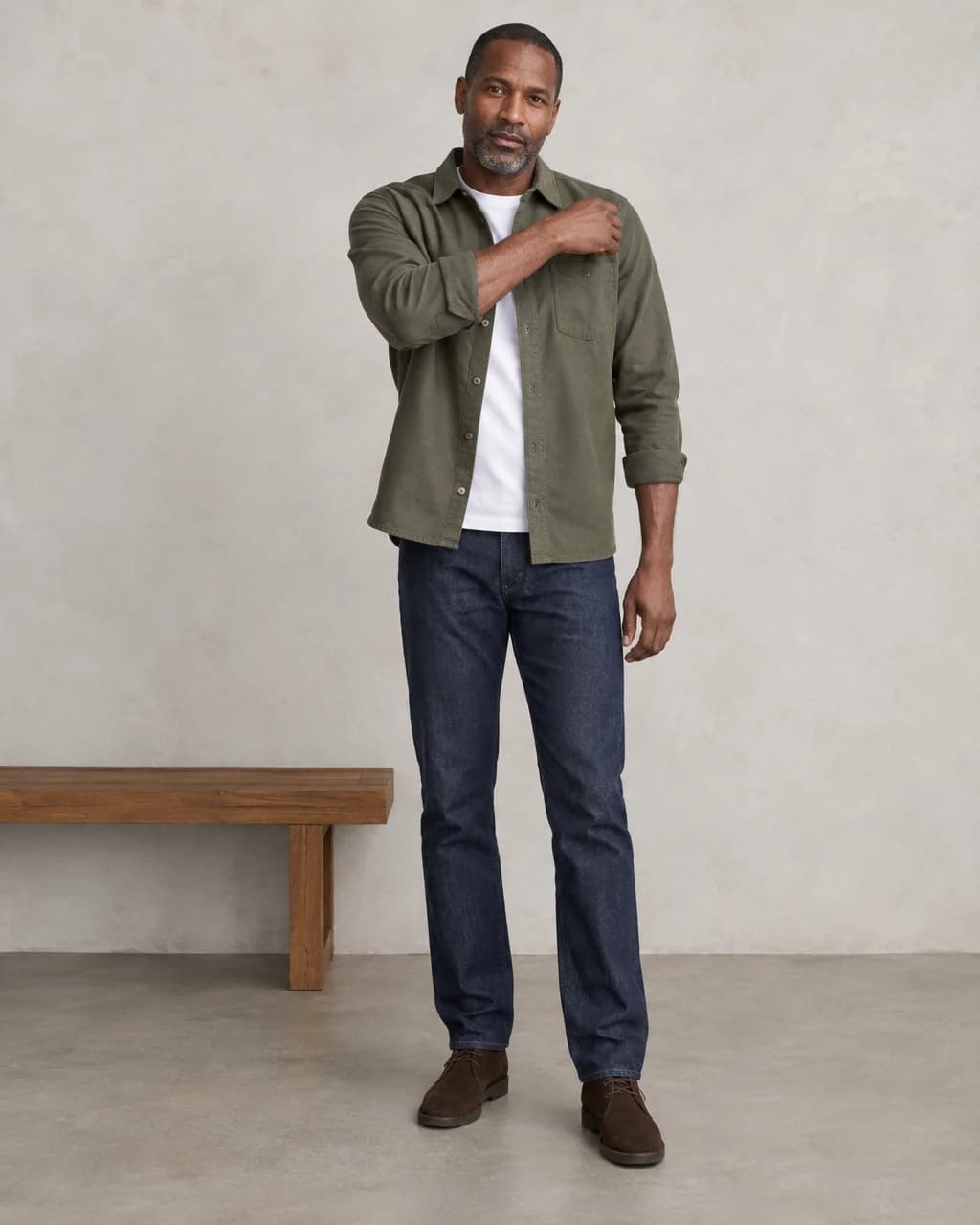
Make room for the layer underneath
Start with one overshirt that fits over your usual tee, then test it with jeans and chinos. Add a fine knit only if the sleeves and shoulders have room. The best combination is the one you can move in comfortably, with trousers and footwear that make sense for where you are going.
Keep building your wardrobe

Men’s Plaid Flannel Shirt Outfits: 6 Ways to Wear Flannel
Six complete men’s plaid flannel outfits, from bold buffalo check to a sherpa-lined shirt jacket, with practical layering, fit, color and occasion advice.

Denim on Denim for Men: 6 Double-Denim Outfit Ideas
Six complete double-denim outfits pairing jackets or shirts with jeans in contrasting washes, plus practical fit, color and care advice.
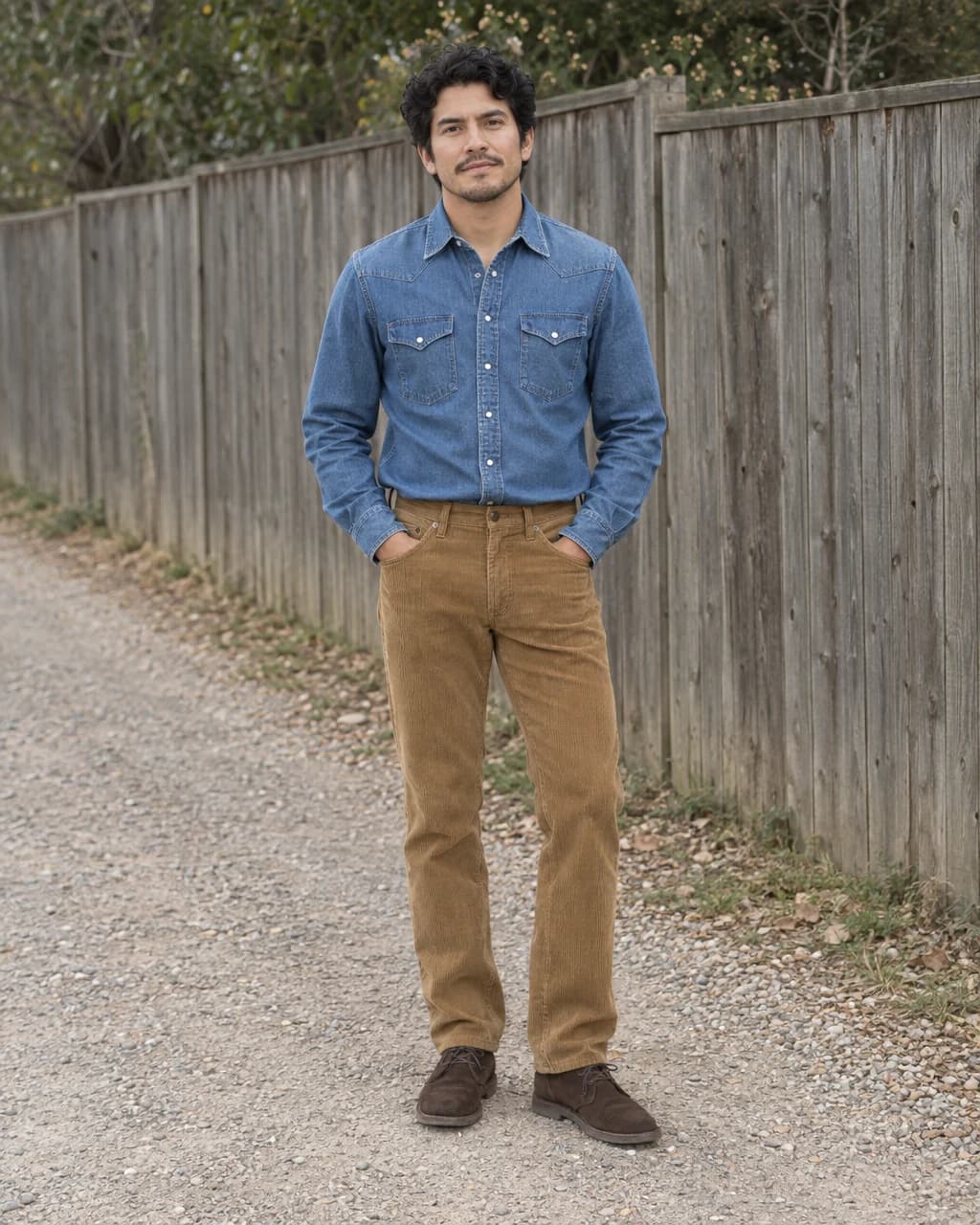
Corduroy Pants Outfits for Men: 6 Ways to Wear Them
Six complete corduroy pants outfits for men, with practical advice on fit, rib width, layers and shoes, plus verified shopping options.