Draft-night photographs capture a particular moment in a player’s life—and in tailoring. Compare five players’ early suits with their later looks, then explore the 1989–2014 timeline below. Shoulder shape, jacket length and trouser volume reveal how much a silhouette can change.
The quick answer: Look at the shoulder, jacket length, button placement, and trouser volume before focusing on the label or price. A more deliberate fit can change the whole impression of a suit, whether you prefer a close or relaxed silhouette.
What to notice in the comparisons
These comparisons contrast roomy draft-night tailoring with closer-fitting suits. That does not mean that every loose suit is wrong or every slim suit is right. A relaxed suit can be intentional; a close suit can be too tight.
Compare the garments themselves. Does the shoulder line look controlled? Is the jacket hanging cleanly when fastened? Do the trousers fall in a coherent line? Those questions are more useful than judging a person’s body or treating one decade’s fashion as the permanent standard.
LeBron James: color changes the emphasis
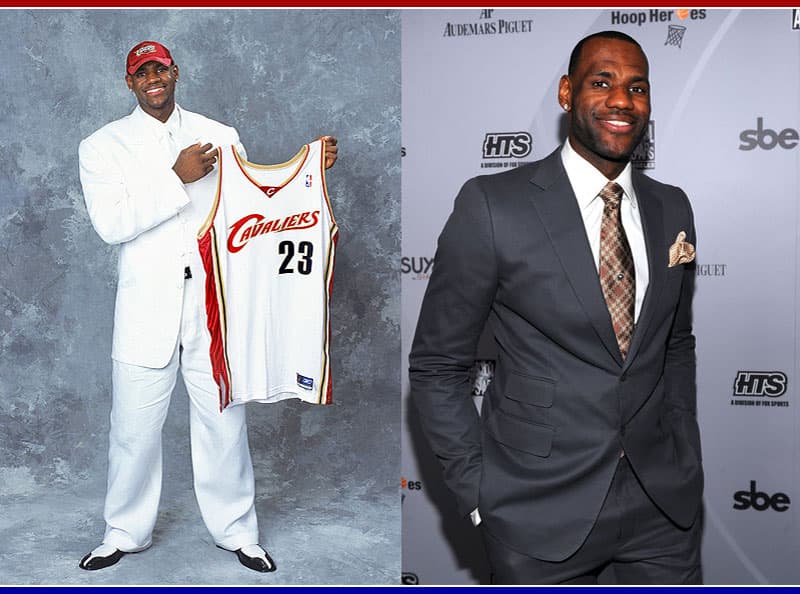
The all-white draft-night outfit makes a bold statement through both color and volume. The darker suit in the paired photograph puts more emphasis on the shirt, tie, and jacket shape. Both are visually distinct choices; the change is not simply “white versus correct.”
For your own wardrobe, decide how much attention you want the suit to attract. Navy and charcoal are straightforward foundations for an ordinary business setting. A light suit can work beautifully when the season and occasion suit it, but it asks for a little more thought about fabric, shoes, and contrast.
Steve Nash: simplify the central details
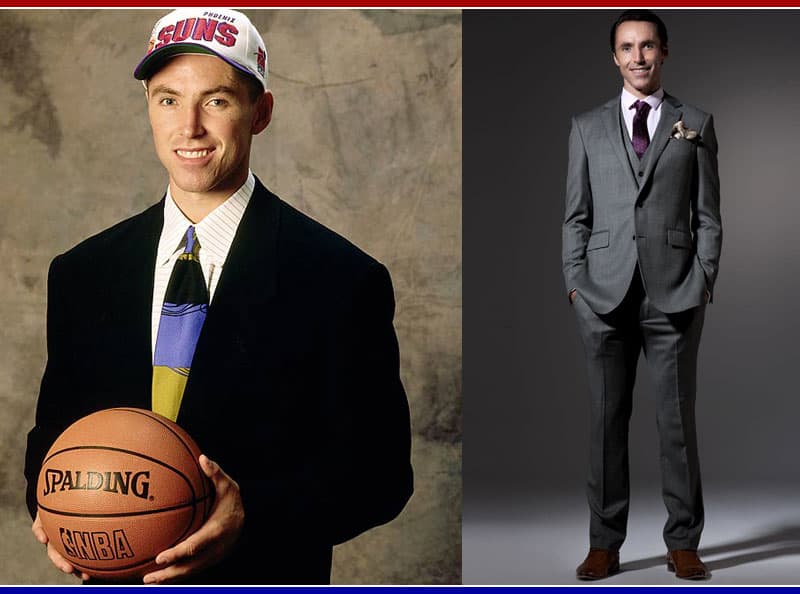
In this pair, the shirt-and-tie area is a useful place to look. The draft-night tie introduces a strong block of pattern and color, while the later outfit reads as a more unified combination. Notice how a quieter tie lets the jacket’s proportions do more of the work.
Try the same exercise before an event: put on the jacket and step back from the mirror. If the tie grabs all the attention, switch to a smaller pattern or a solid. The goal is a combination you chose deliberately, not a rule that all ties must be plain.
Dwight Howard: notice the jacket’s button stance
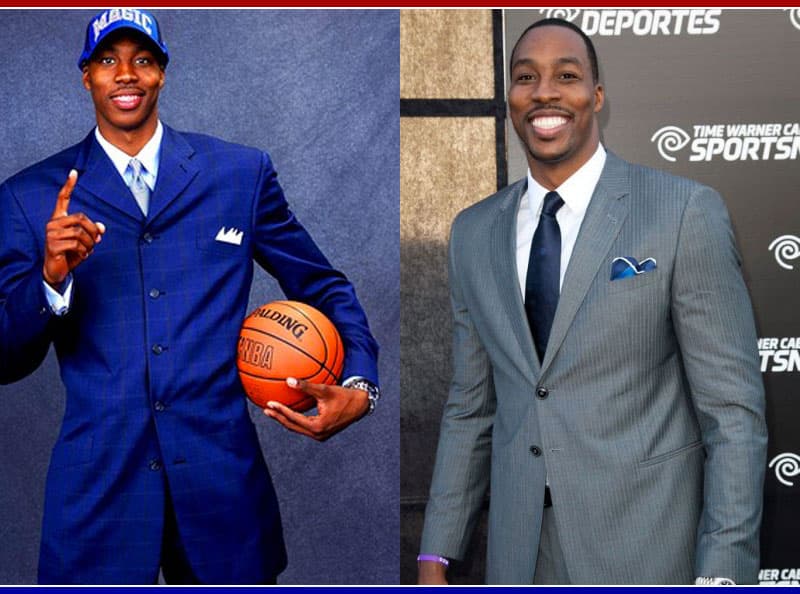
The number and placement of the buttons affect the apparent length of the torso and the size of the shirt opening. The earlier jacket closes higher; the later two-button design leaves a more open V at the chest. This is a change in silhouette as much as a change in size.
When trying on a suit, look at where the jacket closes naturally. If fastening it creates strong pulling around the waist, try another size or cut. Do not assume that taking in the waist will solve a shoulder or chest fit problem.
Dwyane Wade: control the outline
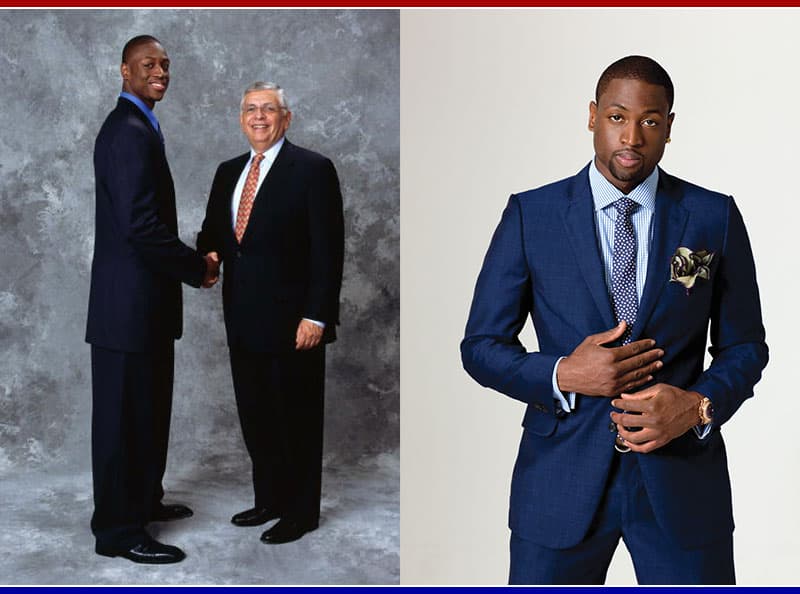
The contrast here is especially clear in the amount of fabric through the jacket and trousers. The later blue suit has a more defined outline, with less visual volume competing around the legs and waist. That makes it easier to see the relationship between the jacket, shirt, and tie.
You can apply that lesson without buying a tight suit. Leave enough room to sit, walk, and raise your arms comfortably. Ask a tailor about excess sleeve or trouser length, but start with a jacket whose shoulders and chest already work.
Carmelo Anthony: compare the whole silhouette
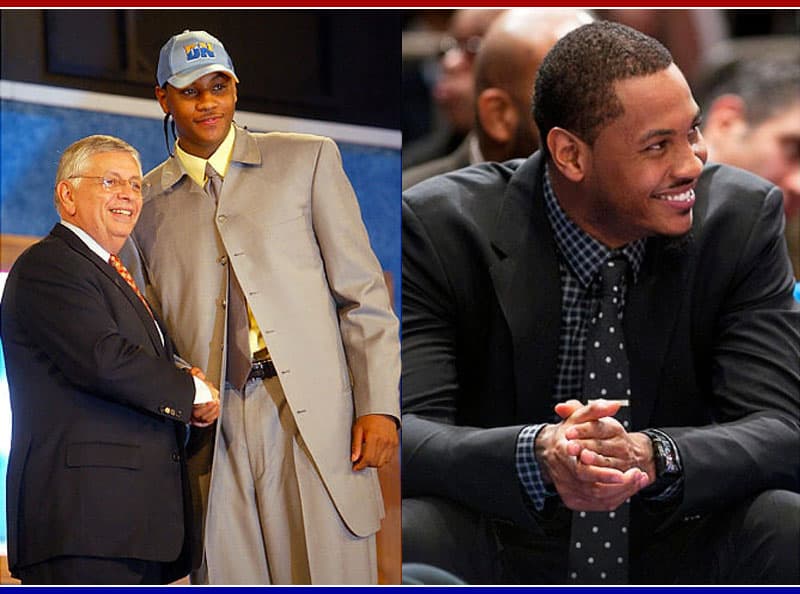
The pale, high-buttoned draft suit and the darker later outfit create very different impressions. Color, jacket length, and the amount of fabric all contribute, so avoid attributing the entire difference to a single detail.
Take front and side photographs when deciding between suits. A garment that looks good in a close mirror may reveal a long sleeve, a strained button, or too much trouser pooling in a full-length photograph. Assess the outfit with the shoes you plan to wear.
Use a five-point fitting-room check
A tailor can assess which adjustments are realistic. Buying a dramatically wrong size because it is on sale can cost more to correct than choosing a better base garment.
- Shoulders: the seam and sleeve should sit cleanly, without a pronounced overhang or dent.
- Chest and waist: fasten the jacket and look for pulling; then sit and move.
- Sleeves: judge their length with your chosen shirt, allowing a small amount of cuff to show if that suits your preference.
- Trousers: choose a rise and leg shape that feel comfortable, then assess the hem with your shoes.
- Accessories: start with a simple shirt and tie so you can judge the suit before adding more pattern.
NBA draft style: 1989–2014
Follow the changes in draft-night tailoring from 1989 to 2014, from generous silhouettes to closer fits.

Frequently asked questions
Are the “later” photographs current?
No. This gallery covers photographs selected in 2014. It compares different moments in their style, rather than their present-day wardrobes.
Were the larger draft-night suits mistakes?
Not necessarily. They reflect personal choices and the fashions of their period. What matters for a suit you buy now is whether its proportions look deliberate and whether it fits comfortably.
Does a slim suit always look better?
No. A suit that pulls at the buttons or restricts movement is too tight regardless of the label. Relaxed tailoring can look polished when the shoulder, length, and trouser shape work together.
Which suit detail should I check first?
Begin with the shoulder and chest fit of the jacket. Hemming trousers or adjusting sleeve length is often more straightforward than correcting a fundamentally unsuitable jacket shape.
Can accessories improve an inexpensive suit?
A suitable shirt, tidy shoes, and a balanced tie can help the overall outfit. They cannot remove severe fit problems, so prioritize the garment’s basic shape first.