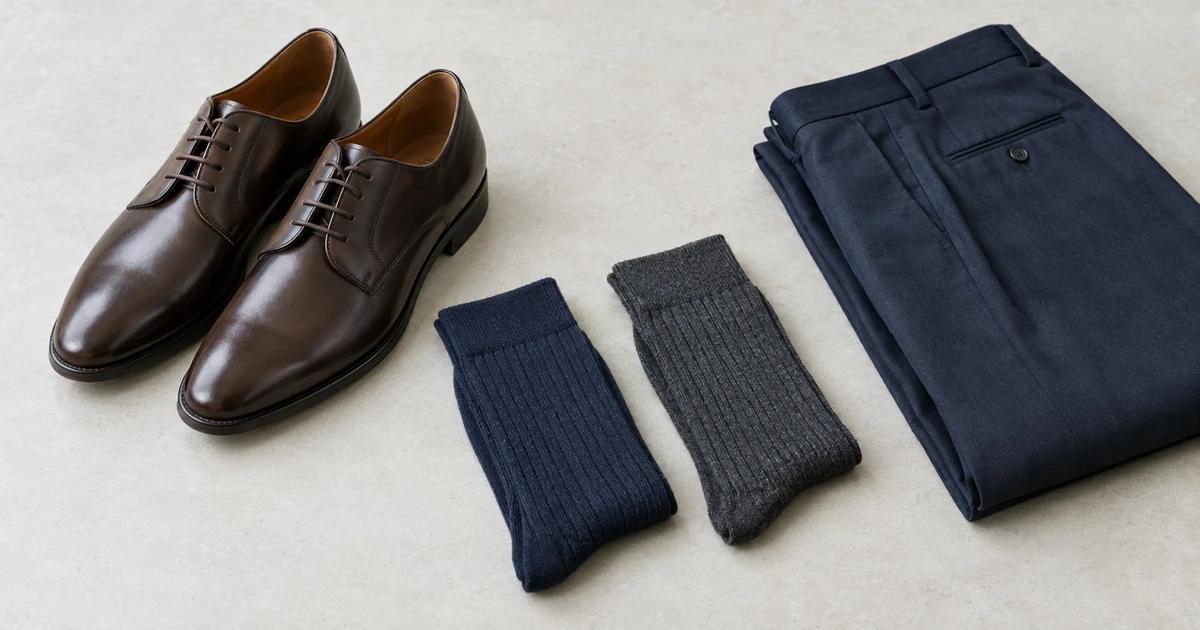
For an easy, understated combination, choose socks close to the color of your trousers. Navy trousers with navy socks and brown shoes look coherent without requiring the socks to match the leather. Then check two things color cannot solve: the socks should provide the coverage you want when you sit down, and their thickness should suit the space inside your shoes.
That gives you a useful starting point, not a uniform. A cream crew sock with jeans and sneakers can look intentional; a patterned pair can add interest to otherwise plain clothes. Decide whether the socks should blend in or become part of the outfit before reaching into the drawer.
Start with the trousers
With tailored trousers, a related sock color creates a quiet transition from hem to shoe. The shades do not need to be identical. Try navy with dark blue, charcoal with gray, or dark brown with brown trousers. FALKE’s styling guide likewise recommends taking the pants as the starting point, while allowing deliberate contrast.
For example, navy trousers, navy socks and brown derbies keep the sock from becoming a separate stripe at the ankle. The shoes can still be brown: matching socks to trousers and coordinating a belt with leather footwear solve different styling decisions.
With pale trousers, you have more choice. A taupe sock with stone chinos is subtle. Navy socks can work with those same chinos if you also wear a navy sweater or overshirt. Lay the pieces together before getting dressed, then judge the whole outfit once the shoes are on.
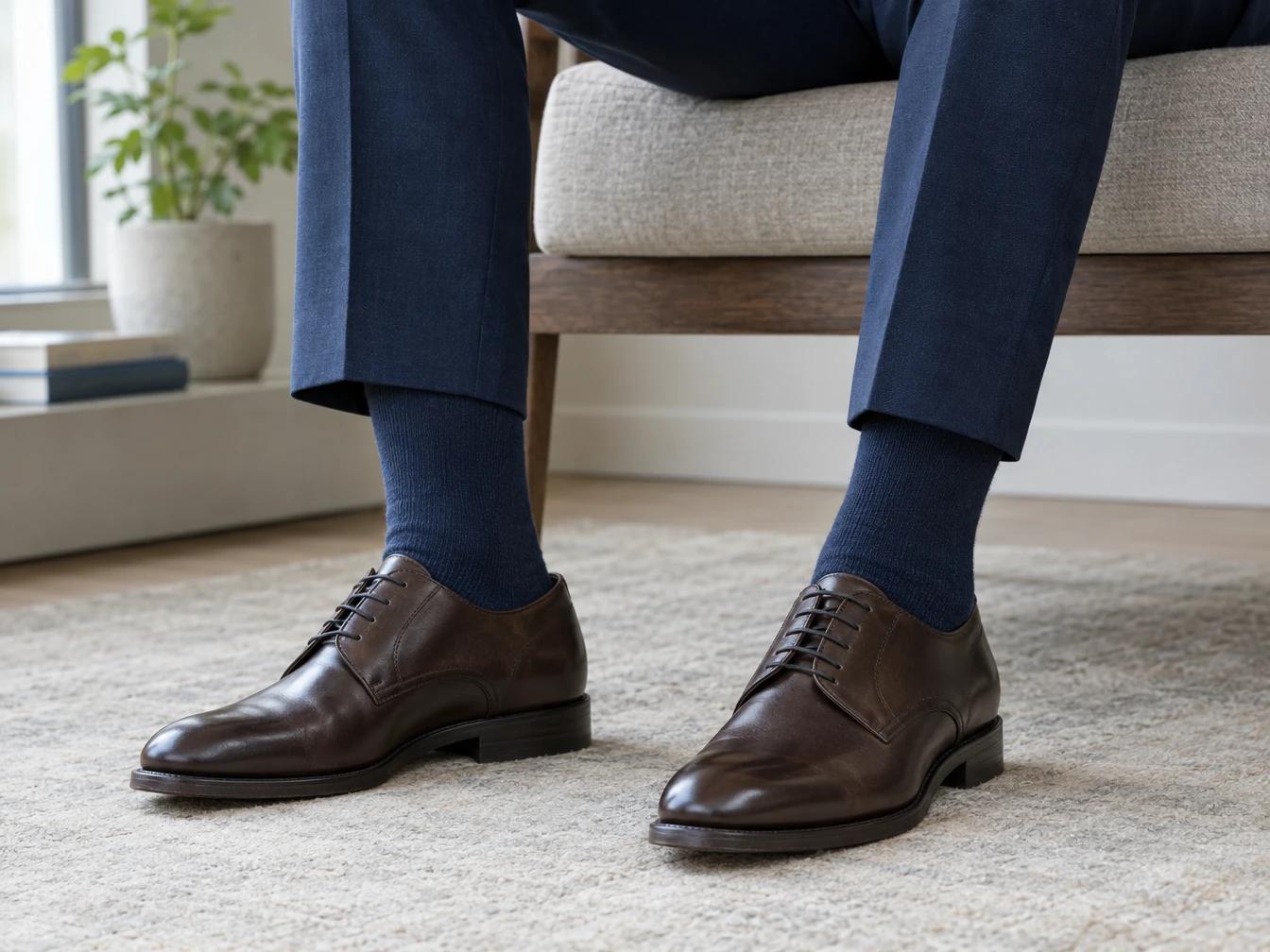
Check the view when you sit down
Stand in front of a mirror, then sit and cross one ankle over the opposite knee. Trouser hems move upward, so a sock that looks long enough while standing can leave a strip of bare leg when seated. If you want continuous coverage with business clothes, try a longer dress sock and repeat the test.
An over-the-calf style is a useful option for that purpose. A crew may be enough with your particular trousers, but the name alone does not tell you exactly where it will end on your leg. Compare the maker’s measurements and your own fit rather than assuming every brand uses the same height.
The cuff should stay up comfortably without needing to be folded repeatedly. Position the heel where your heel sits, smooth out wrinkles and walk around. If the sock slides into the shoe, twists or bunches at the toes, reconsider its size or shape. Darn Tough recommends choosing sock size from its shoe-size chart; use the relevant chart for whichever brand you buy.
Sock height and trouser length work together. Our guide to trouser break explains how the hem meets your shoes, including when a shorter hem deliberately exposes more sock.
Choose thickness with the actual shoes on
Try new socks with the shoes you intend to wear. A bulky pair can turn a comfortable loafer into a tight one, while a very thin pair may feel loose in a boot you normally wear with cushioning. Do not buy by fiber name alone: two socks labeled wool can feel quite different underfoot.
Darn Tough separates yarn weight from cushioning in its sock-selection FAQ. That distinction is useful when reading other product descriptions too. Look for information about the knit and padded areas, then check how the finished sock feels in your footwear.
For close-fitting dress shoes, begin with a fine, relatively smooth sock. For casual boots or roomy sneakers, a more textured or cushioned pair may suit the fit. Walk, bend your toes and sit down before deciding. Extra thickness should not require you to tolerate pressure across the toes or instep.
Let sneakers be more relaxed
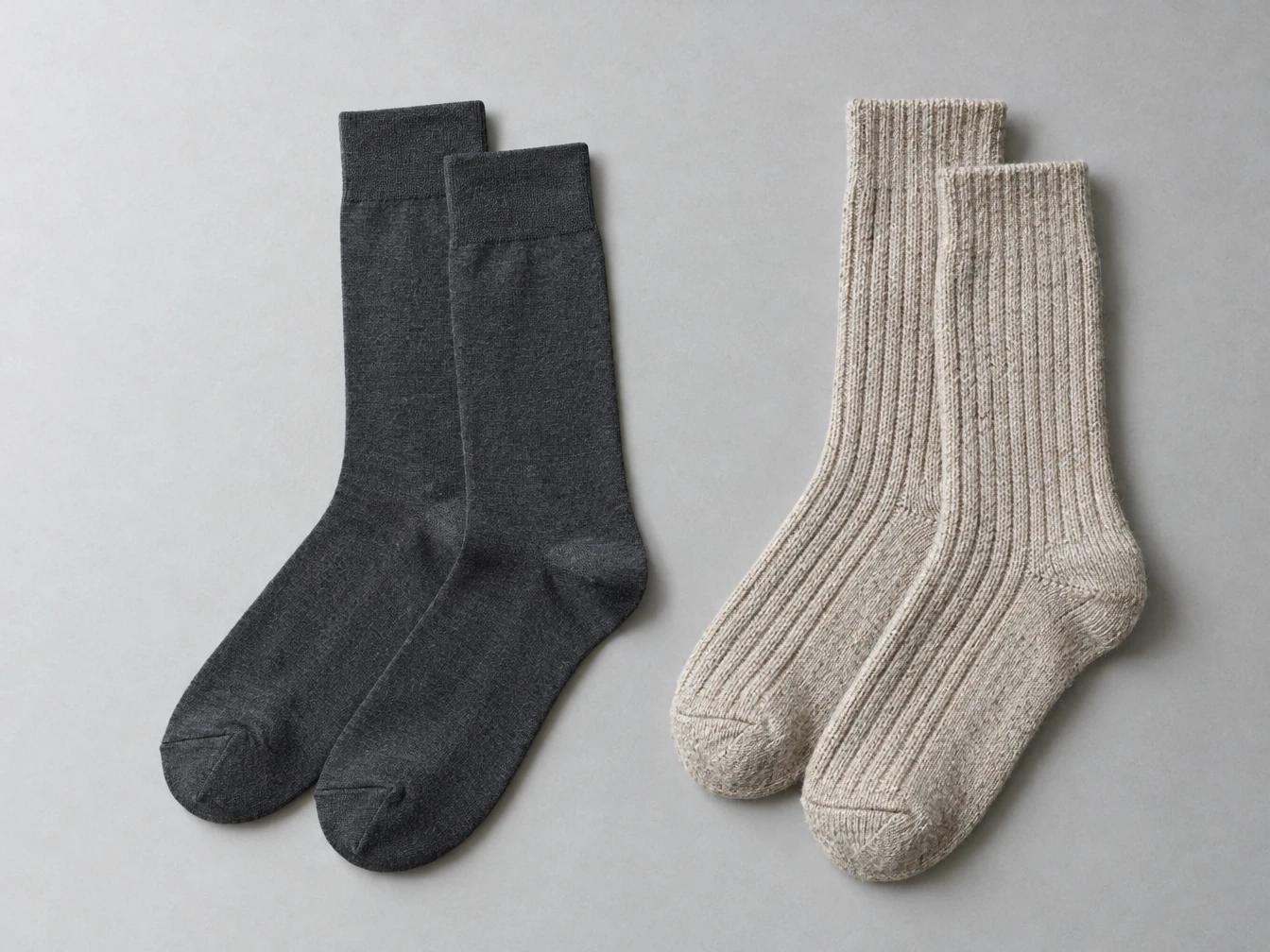
With jeans and sneakers, socks do not have to disappear. Off-white ribbed crews can echo a white T-shirt or light sneakers, while dark socks keep the ankle quieter. Neither approach is automatically better: choose the one that supports the clothes you are wearing.
A small jean cuff can show the sock deliberately. Keep the cuff modest and check the length while seated so that the result looks considered rather than accidental. You do not need to roll every pair of jeans just because you bought interesting socks.
For low-cut footwear and a bare-ankle appearance, use a no-show sock cut for that shoe opening. Test it by walking around: the edge should stay where you want it and the heel should remain in place. A no-show that works in one sneaker may be visible in a lower loafer.

Add one small contrast at a time
If your drawer is mostly black socks, try one muted color before a large novelty pattern. Burgundy with gray trousers, or a small navy-and-gray pattern under plain navy trousers, adds interest without becoming the main event. These are combinations to try, not dress-code requirements.
Keep the surrounding clothes relatively simple while you decide what you like. If the shirt, tie and trousers already have strong patterns, a solid sock often makes the outfit easier to read. For more ideas with dressier layers, see our navy blazer outfit guide.
Two useful navy options
These verified shopping options illustrate a choice of coverage. They are alternatives to the illustrative photography, not claims about the exact socks pictured. Check the selected size, color and current product details before ordering.
As an Amazon Associate, we earn from qualifying purchases.
- GOLDTOE Metropolitan crew dress socks in navy: a plain navy option for someone who prefers crew height. Try the seated check with your trousers rather than assuming it will provide full coverage.
- GOLDTOE Metropolitan over-the-calf dress socks in navy: an alternative if the crew height leaves a gap you would rather cover. The longer shaft changes coverage; it is still important to check foot size and cuff comfort.
You may only need to fill one gap: a navy pair for work trousers, a comfortable casual pair for sneakers, or a longer pair for seated coverage. Sort the socks you already own by the shoes they feel good in, then check color. A coordinated outfit starts with a pair you can comfortably wear all day.
Sources and fit references
- FALKE: styling knee-high socks — trouser-led color coordination and deliberate contrast.
- Darn Tough: choosing socks — shoe-size charts and the distinction between yarn weight and cushioning.